Recent News

New equation for Kharif crops: Preference for 'these' crops instead of cotton!

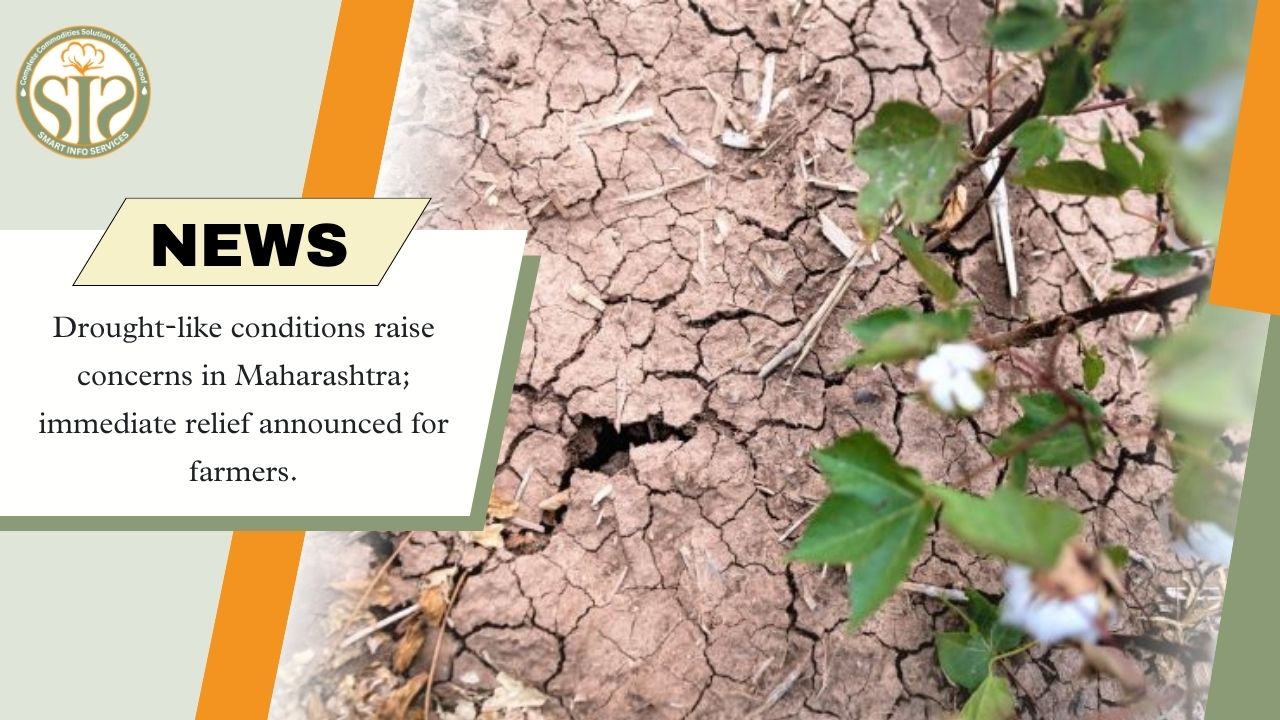
Kharif Switch: Farmers Ditch Cotton for New CropsMaharashtra: There is a big change in the crop pattern for the Kharif season in Chhatrapati Sambhajinagar district. Due to low profit in cotton prices and continuous increase in production cost, farmers are turning to soybean, maize and jowar instead of cotton this year.According to the estimate of the Agriculture Department, the area of cotton will decrease by about 21 thousand hectares, while the area of soybean is estimated to increase by 144 percent.For the last few years, the profit from cotton crop is getting less, prices are also weak. Apart from this, looking at the cost from cultivation to production, it seems that cotton is not affordable.Due to this, the Agriculture Department has estimated that this year the area of cotton in the district will be reduced by about 21,346 hectares. Recently, a pre-kharif season meeting was held in the District Collector's office under the chairmanship of Guardian Minister Sanjay Shirsat. In this meeting, information was given about the possible crop sowing for the Kharif season. According to this, during the Kharif season, sowing is done in about 6 lakh 86 thousand 562 hectares of area in the district. This year also sowing is expected in the same area. However, it was also noted that there will be a change in the crop pattern. For the last several years, cotton is being cultivated on about 3 lakh 87 thousand 146 hectares in the district.The attachment of farmers towards cotton is decreasing, because for the last three years the price received for cotton has not been in line with the production cost. Cotton cultivation has been declining since last year. The Agriculture Department estimates that this year the area will decrease by about 21,346 hectares. While the area of cotton is decreasing in the district, the area of soybean is increasing. Last year, soybean was cultivated on only 24,398 hectares of land in the district. This year this area is estimated to reach 35,125 hectares.The agriculture department said that soybean sowing is expected to increase by 144 per cent. Turi got a good price last year. It was estimated that the area of Turi would increase. Maize crop is also becoming popular among farmers. This year maize will be planted in about 1 lakh 92 thousand 512 hectares. Jowar is on the verge of extinction. Kharif jowar was sown well in the district 30 years ago. However, Kharif jowar is not used for food. Farmers are now sowing jowar only because it provides fodder to animals.read more :-Rupee Rises 28 Paise to 85.06 Against Dollar

Monsoon 2025 Updates: Meteorological Department gives update on monsoon, enters Bay of Bengal, Andaman Sea

IMD Confirms Early Monsoon Onset in Bay of BengalMonsoon 2025 Updates: The IMD declares the arrival of monsoon in India when it reaches Kerala, where the normal arrival date is June 1. From June to mid-July, the monsoon brings continuous rainfall before covering the entire country around July 15. This year, the arrival of monsoon in Kerala is expected to be 5 days earlier and around May 27.Monsoon 2025 Updates: The India Meteorological Department (IMD) on Tuesday declared the arrival of southwest monsoon in some areas of the Bay of Bengal and Andaman Sea. The IMD said, "The southwest monsoon has advanced into some parts of the southern Bay of Bengal, southern parts of Andaman Sea, Nicobar Islands and north Andaman Sea on May 13." He said that the advance of monsoon into the sea may continue during the next three to four days.The Meteorological Department said, "Conditions are favorable for further advance of southwest monsoon into some parts of South Arabian Sea, Maldives and Comorin areas, southern Bay of Bengal, entire Andaman and Nicobar Islands, remaining parts of Andaman Sea and some parts of central Bay of Bengal during next three to four days." According to the Meteorological Department, monsoon rainfall this year is expected to be 'above normal', which is quantitatively 105 per cent of the long period average of 880 mm.IMD Director General Mrityunjay Mahapatra says that above normal minimum temperatures recorded in North India, presence and strengthening of westerly winds at lower atmospheric levels, presence and strengthening of easterly winds at upper atmospheric levels, pre-monsoon rainfall with thunderstorms for about 40 days in the South Peninsula and above normal pressure over the northwest Pacific Ocean, all these factors indicate an early arrival of monsoon.read more :-Rupee Falls 69 Paisa, Closes at 85.34 Against US Dollar

Cotton Farming Issues: Chaos in Cotton Farming

"The Crisis in Cotton: Unraveling the Challenges of Cotton Farming"Cotton Farming Management Techniques: There are indications that this year the monsoon will be earlier than scheduled and heavy. Therefore, the eagerness of farmers to sow the Kharif crop has also increased. Since cotton farming is a loss-making crop, the area under cultivation is expected to decline this year across the country. According to estimates, even if the area in the state is reduced by 15 per cent, cotton will be cultivated in about 40 lakh hectares. Though cotton farming is already proving to be a lucrative business, the growers will also have to bear the brunt of the increase in seed prices this year.Farmers will have to pay Rs 901 for a packet of BG-2 seeds, which cost Rs 864 last year. Of course, there is an increase of Rs 37 per packet! Though the increase per packet seems less, but one to one and a quarter crore seed packets are sold in the state. Therefore, cotton growers in the state will have to bear an additional burden of Rs 37 to 46 crore for seeds alone.The looting of growers by unauthorized HTBT seeds is different! In the last decade, BT cotton has been increasingly affected by pink bollworm, sap sucking pests and red spot. Therefore, productivity is declining. Interestingly, the companies have not done much research on new varieties. Moreover, while the companies only cost them Rs. 500 to Rs. 550 per kg to produce BT seed, they sell it at Rs. 2,000 per kg. Both these circumstances cannot justify the increase in prices of BT seeds.Another important issue in cotton cultivation is that before the advent of BT, varieties were selected according to the type of soil. There was a widespread practice of planting saplings at a fixed distance. Now any variety can be grown in any soil. The Pawali method of cultivation is being adopted everywhere, in which the distance between two rows and two trees is not fixed. Companies have popularised this practice to ensure more Bt seeds are used.There is a lot of confusion among cotton growers regarding nutrient management, and most farmers do not apply the recommended amount of fertiliser to cotton. There is no concrete guidance from agricultural universities or the Central Cotton Research Institute regarding Bt cotton management. Therefore, there is a lot of confusion among growers regarding cotton cultivation and management. To put an end to all this chaos in Bt cotton cultivation, the Union Agriculture Ministry issued a directive on January 15, 2025, stating that seed producing companies should also provide a leaflet with comprehensive information about seeds and management along with the packet.Taking the matter seriously, the companies were asked to provide information leaflets along with the seeds from this season. But instead of doing so, the companies objected, saying that a similar decision should be taken not only for cotton but also for seeds of other crops. They wanted to kill time and they achieved it. Three months passed. The central government issued revised orders regarding brochures for all crops on April 11. By then, seeds of cotton and other crops for the Kharif season had already been distributed.So, companies relied on QR codes instead of brochures. Many farmers do not have Android phones. Still, how many of them manage their crops by scanning QR codes? This can be a subject of research. So, farmers should get comprehensive brochures along with seeds of cotton and other crops at least from the next year's season. The agriculture department must ensure that farmers adopt advanced management techniques instead of only providing brochures.read more :-Rupee Opens Strong at 84.65, Gains 72 Paise

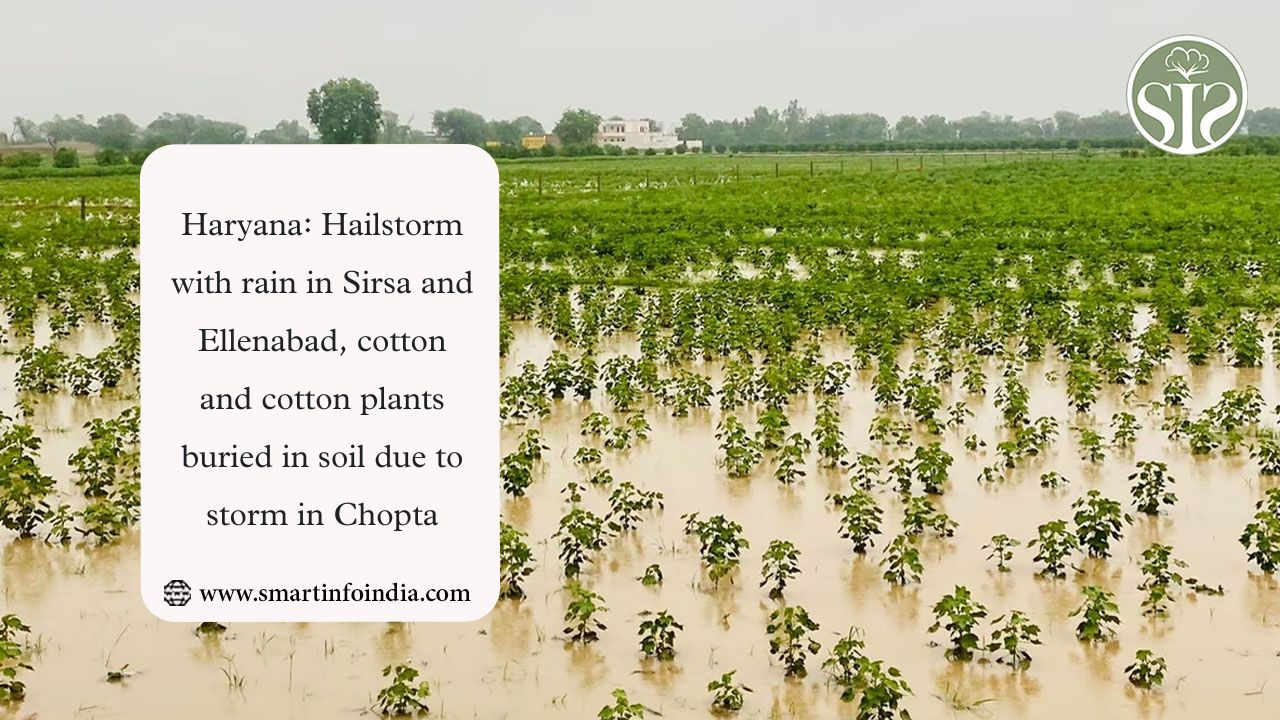
Haryana: Hailstorm with rain in Sirsa and Ellenabad, cotton and cotton plants buried in soil due to storm in Chopta

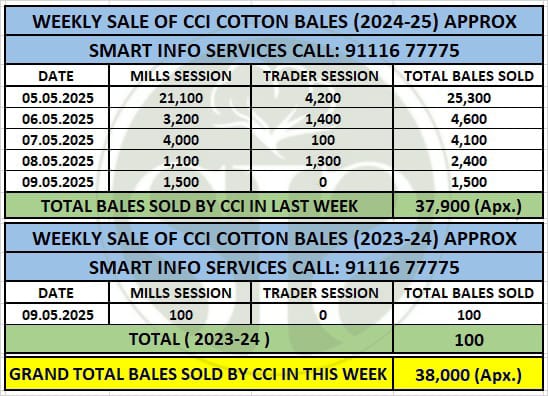
Haryana: Cotton and cotton plants buried in soil as a result of the storm in Chopta; hailstorm and rain in Sirsa and EllenabadSirsa . Hailstorm along with rain occurred in the city on Sunday afternoon. The hail was small in size, but lasted for two to three minutes. Due to strong winds, branches of trees fell on power lines in many colonies, due to which power supply was disrupted, which was restored in two to three hours. Cotton and cotton crops have been damaged in more than 10 villages of Chopta area. Due to dust storm, small plants have been completely buried in the soil.Repair work is going on in the city these days regarding the main sewerage line and drainage of rainwater, but the 7 mm rain on Sunday exposed the claims of the Municipal Council. The main roads of many areas were filled with water up to one and a half to two feet, due to which people had to face a lot of problems.The main line built for drainage of rainwater is broken near the disposal point, for which the Municipal Council officials are not able to give any clear time limit so far. Pipes are being replaced in the name of changing valves, but technically this line is not capable of withstanding pressure. This is the reason why a part of about 200 meters from the disposal is breaking repeatedly.The Meteorological Department has issued a warning of heavy rain in the coming days. In such a situation, if the drainage remains in this condition, then extensive waterlogging may have to be faced.After half an hour of rain in village Rodi, the streets got waterlogged. Kalanwali Road, Talwandi Sabo Road and Jatan Kalan Road and the streets of the village were filled with water. Farmer Aya Singh said that his field is on the road from Rodi to Tibbi. During the storm and rain, all the solar plates of the solar tubewell installed in his field broke. The electricity pole installed nearby also broke.Ellenabad: Gram-sized hailstones fellBefore the strong storm in the evening in Ellenabad, the sky was covered with dust clouds. After some time, heavy rain occurred. Gram-sized hailstones also fell in many villages along with the rain. People told that for the last few days the temperature was continuously crossing 38 to 42 degrees Celsius. The rain has made the weather pleasant.A tree broke and fell on the Ellenabad Sirsa road. Due to this, the drivers coming and going had to face a lot of trouble.Chopta area: Dust storm caused damage to cotton and cottonseedIn the Chopta area bordering Rajasthan, the storm has caused a lot of damage to the cotton and cotton crops. The storm destroyed the cotton crop in the sandy area. The sudden strong storm in several villages including Kagadana, Kumhariya, Khedi, Gusaiana, Rajpura, Jasaniya, Rampura Navabad, Chaharwala, Jogiwala of the region has had an adverse effect on the indigenous cotton crop. Farmers Maniram, Mahendra Singh, Jagdish, Ram Kumar, Sarwan Kumar said that the cotton crops were sown after the recent rains. Now due to the strong storm, the cotton and cotton plants got buried in the sand. After the government cut the canal water, the cotton and cotton crops were sown with great difficulty, but the natural calamity has ruined everything.READ MORE :-  Weekly Summary Report : Cotton Bales Sold by Cotton Corporation of India (CCI)

Telangana faces cotton seed crunch amid expanding cultivation area in Kharif

Cotton Seed Shortage Hits Telangana Amid Kharif ExpansionOver 1.07 crore packets of cotton seeds required to sustain the planned expansion; overall availability of seeds stands at only half of the projected requirement, say sourcesHyderabad : As Telangana gears up for a substantial increase in cotton cultivation during Kharif 2025 season, the demand for quality cotton seeds has surged. Farmers are shifting back to cotton due to promising market returns. But their worries are mounting over whether the seed supply can meet the projected requirement.The crop, traditionally comprising over 40 per cent of the total sown area in the State, is favoured for its adaptability to Telangana’s climate and soil conditions. Additionally, strong market demand has fuelled the surge, with cotton fetching attractive prices of Rs 8,000 to Rs 14,000 per quintal in previous seasons. Disillusioned by losses incurred in alternative crops such as pulses, maize, soybean, and turmeric, farmers are turning back to cotton for better returns.With cotton cultivation set to expand beyond 20.50 lakh hectares, the demand for quality cotton seeds has skyrocketed. Officials estimate that over 1.07 crore packets of cotton seeds are required to sustain the planned expansion. A buffer of 15 per cent is always mandated to meet contingencies that may arise due to calamities. In different districts farmers were forced to go for second sowing as dry spells resulted in poor germination of seed.The overall availability of cotton seeds stands at only half of the projected requirement, according to sources. It has created concerns over whether farmers would have access to sufficient seeds before sowing begins in late May. Officials claim that moves were afoot to make 2.4 crore packets (450 gm each) of cotton seeds available. But logistical hurdles and market supply constraints pose challenges.In the past, shortages in certain districts have enabled private sellers to exploit farmers by charging inflated prices. With demand peaking, growers are anxious to see if the government will intervene decisively to ensure timely availability or allow private traders to dominate the market once again.Spurious seeds making it to outlets would be a major problem. It can be addressed only by positioning adequate stock by the end of May. The presence of Cotton Corporation of India (CCI) purchase centers in key districts like Adilabad and Mahabubnagar is expected to facilitate fair market access. Beyond seed shortages, farmers may face pest related issues such as pink bollworm infestations, labor shortages, and climate variability, which could impact yields despite the acreage increase.read more :-Rupee higher 47 Paisa Against Dollar, Closes at 85.37

Related News

Youtube Videos

कैसा रहा आज का कपास बाज़ार? 😱 Cotton Market Rate Today 28 Sep 2026
कैसा रहा आज का कपास बाज़ार? 😱 Cotton Market Rate Today 28 S...
साप्ताहिक कपास रिपोर्ट 😱 तेज़ी या मंदी? Weekly Cotton Market 26 Sep 2026
साप्ताहिक कपास रिपोर्ट 😱 तेज़ी या मंदी? Weekly Cotton Marke...
ऐसा रहा आज कपास बाज़ार 😱 महाराष्ट्र कपास बुवाई जानकारी | Cotton Market Rate Today 24 Sep 2026
ऐसा रहा आज कपास बाज़ार 😱 महाराष्ट्र कपास बुवाई जानकारी | Co...
Application Download
Whatsapp Contact