Recent News

Int’l recognition to HAU scientists for finding cotton disease pathotype

HAU Scientists Earn International Recognition for Discovering Cotton Disease PathotypeHisar: Scientists from Chaudhary Charan Singh Haryana Agricultural University (HAU), Hisar, have identified a new pathotype of a severe disease that impacts the cotton crop.HAU vice-chancellor Prof B R Kamboj said on Wednesday that this is the first time that the pathotype (VCG 0111, Race-1) of fusarium wilt has been detected in India.He said scientists had already initiated efforts to manage the disease and remain optimistic about finding an effective solution to it.The discovery has received recognition from Elsevier, a Dutch publishing house specialising in scientific, technical, and medical research. An HAU study on the pathotype has been published in the journal Physiological and Molecular Plant Pathology, making it the first-ever report on this new cotton pathotype.prof Kamboj lauded the research team for the achievement, emphasising the importance of early identification of emerging agricultural threats. He urged scientists to maintain strict monitoring of the disease's spread and implement swift, effective management practices to mitigate its impact on cotton production.HAU director of research Rajbir Garg highlighted the growing menace posed by fusarium wilt, which now affects both ‘desi' and American cotton varieties with increased aggression.Lead researcher Anil Kumar Saini stressed the team's ongoing efforts to decode the disease's outbreak and develop targeted mitigation measures, safeguarding India's cotton industry.read more :-Rupee opens 7 paise up at 86.89 against US dollar

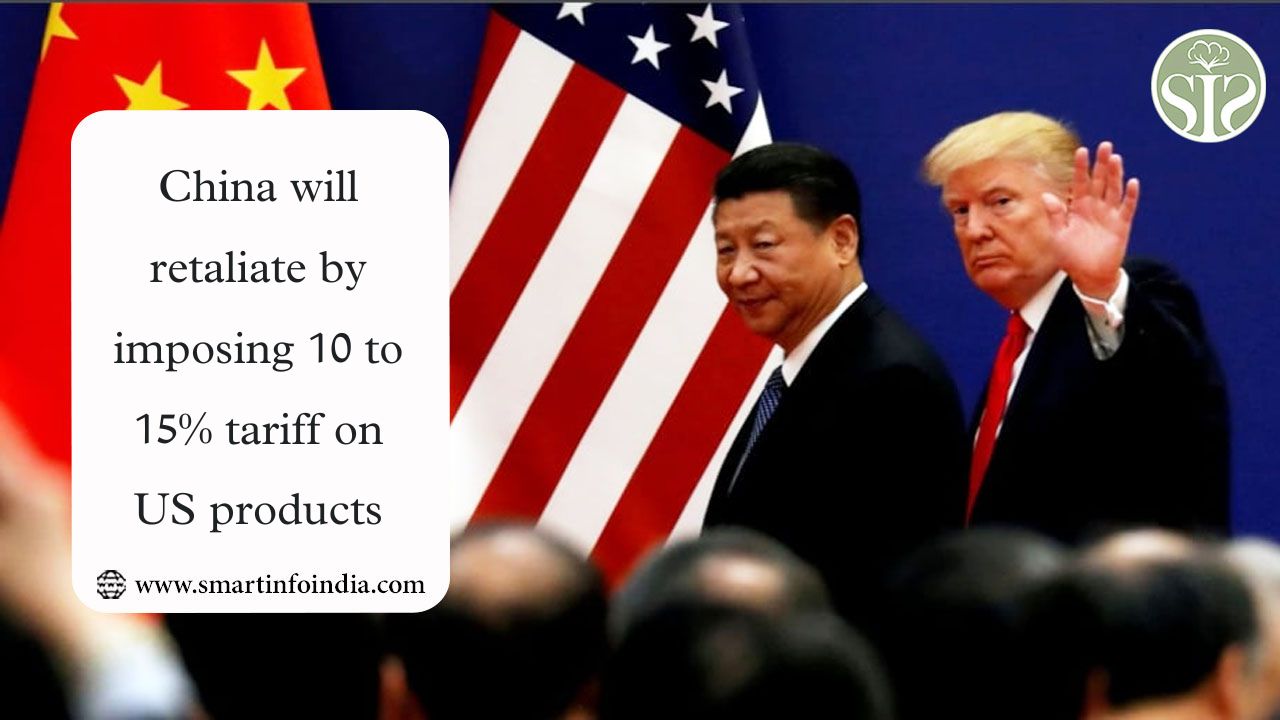
Reciprocal US tariffs against India, China, other nations from Apr 2

US to Impose Reciprocal Tariffs on India, China, and Other Nations Starting April 2US retaliatory tariffs would kick in from April 2 against nations charging higher duties on American exports, President Donald Trump announced yesterday. These nations include China and India.In his address to the joint session of Congress, Trump called tariffs charged by India and other countries, including China, ‘very unfair’.Trump said he wants to impose the same tariff on imports from foreign countries as those nations impose on US exports."Other countries have used tariffs against us for decades and now it's our turn to start using them against those other countries. On average, the European Union, China, Brazil, India, Mexico and Canada—have you heard of them—and countless other nations charge us tremendously higher tariffs than we charge them. It's very unfair," Trump said Tuesday night in the longest address to the Joint Session of the Congress."India charges us auto tariffs higher than 100 per cent…..China's average tariff on our products is twice... and South Korea's average tariff is four times higher. Think of that, four times higher. And we give so much help militarily and in so many other ways to South Korea. But that's what happens. This is happening by friend and foe. This system is not fair to the United States. It never was," he was quoted as saying by global media reports.His administration would also retaliate to non-monetary tariffs with ‘non-monetary barriers’, Trump said."They don't even allow us in their market. We will take in trillions and trillions of dollars that create jobs like we have never seen before. I did it with China, and I did it with others, and the Biden administration couldn't do anything about it because there was so much money, they couldn't do anything about it," he said."We have been ripped off for decades by nearly every country on Earth, and we will not let that happen any longer," he added.Higher tariffs on Indian exports like textiles would make these products more expensive in the United States, reducing demand, which may hurt Indian manufacturers and exporters and raise prices for American consumers.The announcements came after the United States decided to impose 25-per cent tariffs on its neighbouring countries and two of its biggest trade partners, Mexico and Canada.The United States also doubled tariffs on Chinese goods from 10 per cent to 20 per cent, citing lack of action from China on its alleged role in fentanyl production and exports.read more :-Cotton News: Big upheaval in cotton prices in March! What do experts predict?

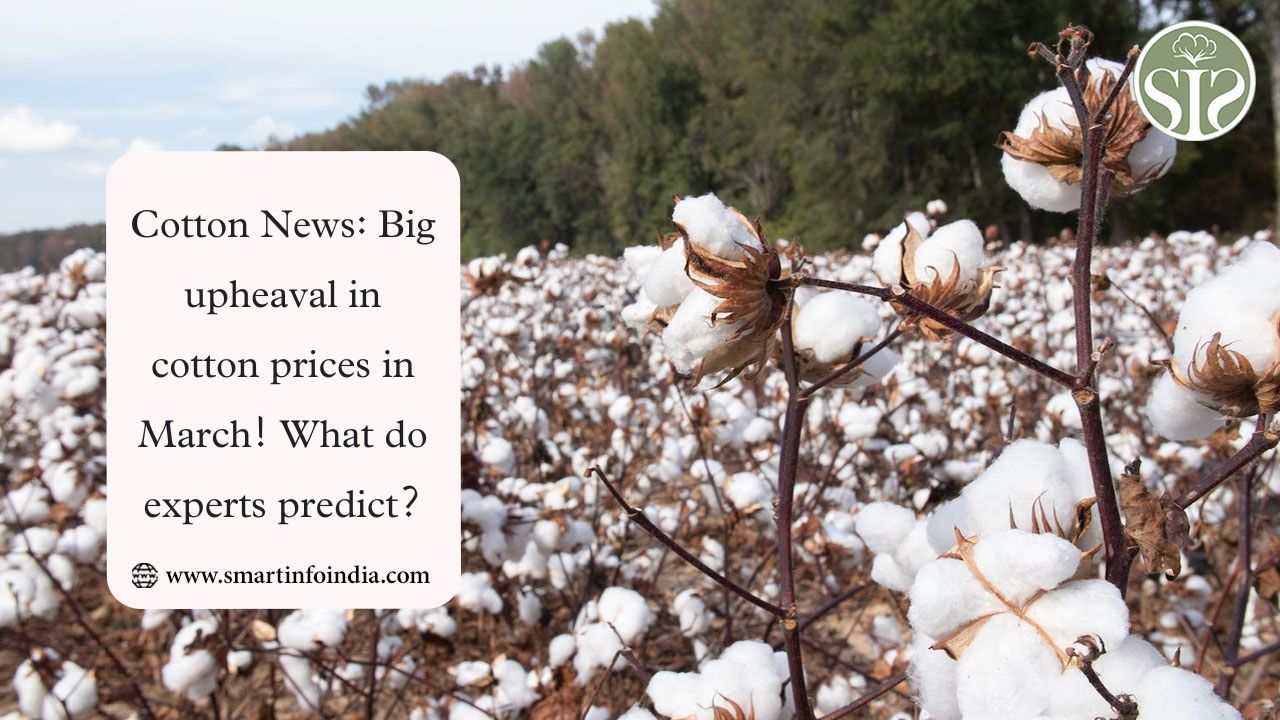
Cotton News: Big upheaval in cotton prices in March! What do experts predict?

March Cotton Market Shock: Experts Predict Major Price Volatility!Cotton News :- There has been a big stir in the cotton market in early March. At present, the arrival of cotton in the market is slow and the Cotton Corporation of India (CCI) has purchased a total of 94 lakh bales of cotton so far. However, there has not been much positive impact on cotton prices and the current price is still below the minimum support price.Cotton prices are under pressure due to the continuous slowdown in the international market and stable demand in the domestic market. According to experts, there is little chance of any major improvement in cotton prices in March as well. Even though the country's total cotton production has declined, the country's cotton industry is also being affected by the low prices of cotton and yarn in the international market.Currently, cotton prices are falling continuously in the international market. By noon, this rate fell by about 3 percent to 63 cents per pound. Due to this, American farmers are also trapped in the economic crisis, which is indirectly affecting the Indian cotton farmers.Due to low prices, cotton imports are being boosted in the country, so there is no major bullish trend in the local market. According to experts' estimates, cotton prices are likely to fluctuate between Rs 100 and Rs 200 in March, but there is little chance of a stable and big increase.The cotton season has now completed five months and so far 21.6 million bales have arrived across the country. The country's estimated total production is 30.1 million bales, out of which about 72 percent of cotton has already been sold by farmers. Now only 28 percent of cotton arrivals are left.Due to a sharp decline in cotton production this year, farmers were likely not to get the expected price. However, due to the slowdown in the global market and low demand, prices have not increased much. Arrivals in the market are gradually decreasing, but there is pressure on prices.Cotton market price situation in MarchUsually, a decrease in cotton arrivals is seen in the month of March, which leads to improvement in prices. However, this year the situation is different. Currently, the average price of cotton in markets across the country is Rs 7,000 to Rs 7,300 per quintal. On an average, 90,000 to 1 lakh bales are arriving per day. Arrivals are likely to fall further in March, but it is not yet certain whether this will have a positive impact on price rise.Cotton purchases made by CCI so farThe Cotton Corporation of India (CCI) has so far procured 94 lakh bales of cotton, of which 28 lakh bales have been purchased from Maharashtra alone. However, due to lack of expected demand from the industrial sector, CCI has had to buy about 43 per cent of the country's total cotton imports. Cotton prices have improved somewhat in the last three weeks, but there have been some obstacles in CCI's procurement process.Therefore, CCI's purchases have slowed down in the last few days, which has benefited the open market. Therefore, farmers are now preferring to sell cotton in the open market. However, there are no signs that cotton prices will increase significantly in March, so farmers need to be cautious in their selling decisions.read more :-Rupee opens 4 paise up at 87.23 against US dollar

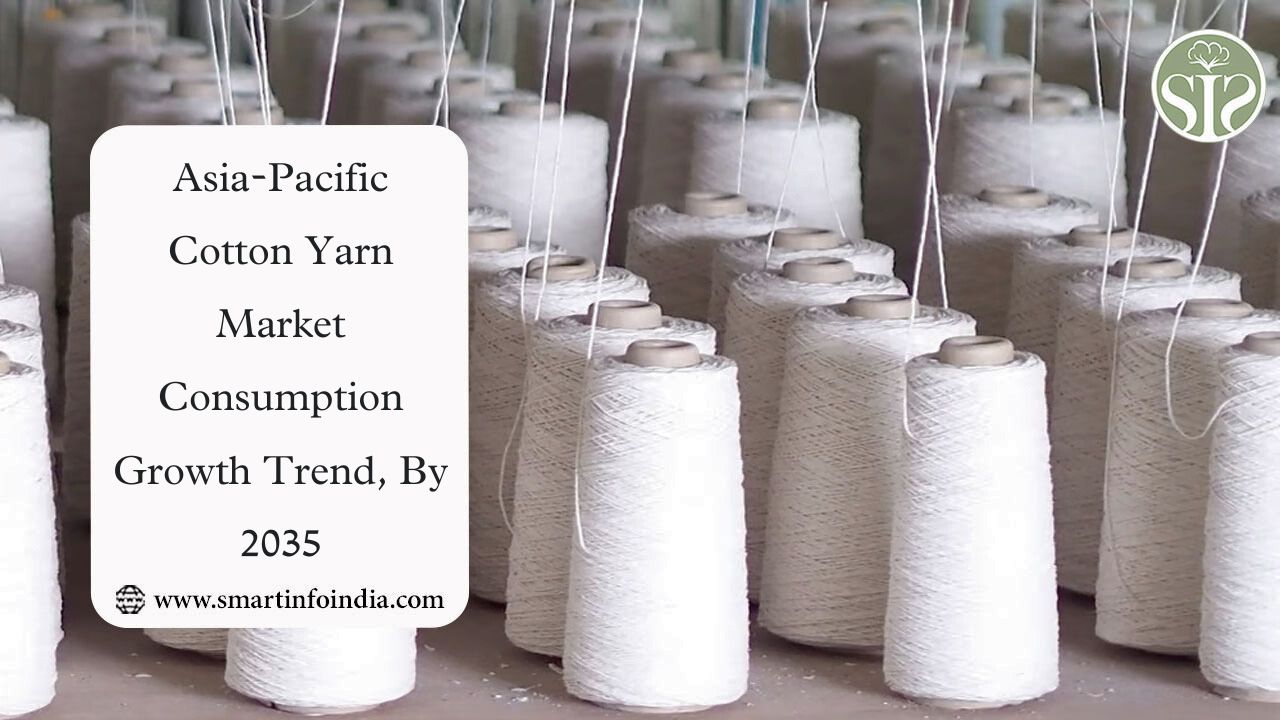
Asia-Pacific Cotton Yarn Market Consumption Growth Trend, By 2035

Growth Trend in the Asia-Pacific Cotton Yarn Market Consumption by 2035Projected to Reach US$72.7 Billion Over the next ten years, the Asia-Pacific region is projected to continue its upward trend in cotton yarn consumption, driven by the growing demand for cotton yarn, says a report by IndexBox. The market is expected to continue on its current trajectory, growing at an estimated compound annual growth rate (CAGR) of +0.5 percent between 2024 and 2035, and reach a market size of 19 million tons by the end of 2035. In value terms, the market is expected to grow at an estimated compound annual growth rate (CAGR) of +1.3 percent between 2024 and 2035, and reach a market size of US$72.7 billion (at nominal wholesale prices) by the end of 2035.Consumption of cotton yarn in Asia-Pacific stabilized last year at 18 million tons expected in 2024. In 2024, the Asia-Pacific cotton yarn market was valued at US$62.8 billion, almost the same as last year.The three largest consuming countries in 2024—China (7.4 million tons), India (4.7 million tons) and Pakistan (3.4 million tons)—accounted for 88 percent of total consumption.Among the major consuming countries, India achieved the most notable rate of consumption growth (compound annual growth rate of +8.5 percent) from 2013 to 2024, while consumption in other leading countries grew at more moderate rates.China (US$30.4B) led the market alone in terms of value, with India in second place (US$15.2B) followed by Pakistan. The average annual growth rate of value in China from 2013 to 2024 was -3.8 percent. The average annual rates in the other countries were as follows: Pakistan (+3.1 percent annually) and India (+8.0 percent annually).India achieved the highest rate of consumption growth among the major consumer countries between 2013 and 2024 (a compound annual growth rate of +7.4 percent), while the other leaders' consumption grew at more moderate rates.Cotton yarn production remained largely unchanged from the previous year, with 18 million tons produced in Asia-Pacific in 2024. Projected export values for cotton yarn production in 2024 were US$61.7 billion.The three countries with the highest production in 2024—China (6.2 million tons), India (5.8 million tons), and Pakistan (3.7 million tons)—accounted for 87 percent of total production. Bangladesh, South Korea, Vietnam, and Indonesia followed slightly behind, contributing an additional 11 percent.China was the largest importer of cotton yarn in 2024, accounting for 59 percent of all imports with 1.5 million tons. South Korea (176K tons) and Bangladesh (531K tons), which accounted for 28 percent of total imports, followed closely behind. Vietnam remained far behind at the top with 84K tons.With a 52 percent share in total imports, China (US$3.5B) is the largest market in the Asia-Pacific region for imported cotton yarn. Bangladesh (US$1.6B) was second (US$1.6B), accounting for 23 percent of total imports. South Korea was second with an 8.1 percent share.With nearly 37 percent and 34 percent share in total exports, respectively, India (1 million tons) and Vietnam (1 million tons) were the top exporters of cotton yarn in 2024. China was second with 287K tonnes or 10 percent of total shipments (in physical terms), followed by Pakistan with 9.3 percent. These leaders were far ahead of Malaysia (89K tonnes), Indonesia (70K tonnes) and Taiwan (Chinese) (64K tonnes).In 2024, the three nations with the largest export value – China (US$1.1 billion), Vietnam (US$2.8 billion) and India (US$3.4 billion) – accounted for 83 percent of all exports. With a combined 15 percent share, Pakistan, Malaysia, Indonesia and Taiwan (Chinese) trailed slightly behind.read more :-Indian Rupee higher 9 Paisa, Ends at 87.27 per Dollar

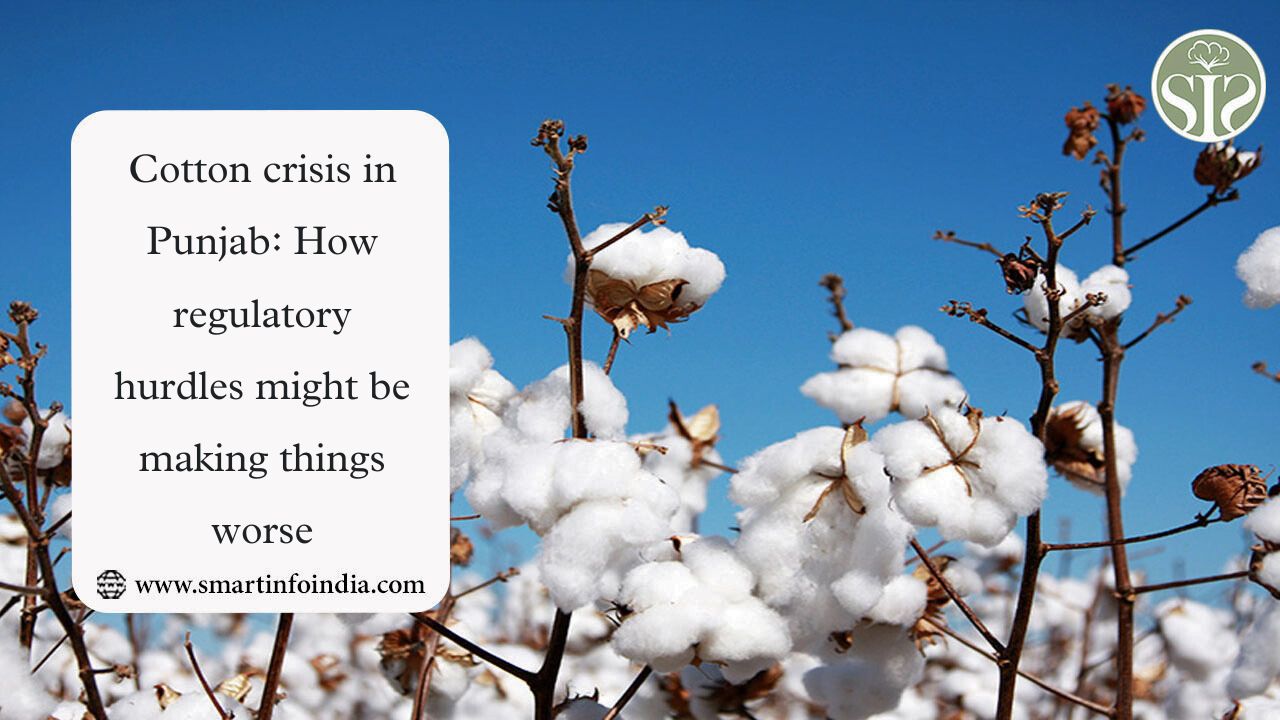
Cotton crisis in Punjab: How regulatory hurdles might be making things worse

Punjab's cotton crisis: How potential regulatory obstacles could be exacerbating the situationIn recent years, whiteflies and pink bollworms have wreaked havoc on the cotton crop in North India. Cotton yields are down, as is the area under cotton cultivation — the crop was cultivated in only one lakh hectares in Punjab in 2024, down from nearly eight lakh hectares three decades back. The drop in acreage has in turn harmed the ginning industry — only 22 ginning units remain operational in Punjab today, down from 422 in 2004.Ahead of the cotton sowing season, farmers are thus calling for the swift approval of Bollgard-3, a new pest-resistant genetically-modified (GM) cotton variety developed by Monsanto. Can this be a game-changer? The short answer is that it can be. But Indians won’t have access to it any time soon.Bollgard-3, a Bt cotton varietyBollgard-3 was developed by Monsanto more than a decade ago, and shows remarkable resistance to pests. It contains three Bt proteins Cry1Ac, Cry2Ab and Vip3A that cause insect death by disrupting their normal gut function. This in turn allows for the growth of a healthier cotton crop, and increases yield.Bacillus thuringiensis (Bt) is a soil-dwelling bacterium with potent insecticidal properties. In the past few decades, researchers have successfully inserted certain genes from Bt in various crops, like cotton, providing these with insect-repellent properties.Bollgard-1 was a Monsanto-developed Bt cotton introduced in India in 2002, followed by Bollgard-2 in 2006. The latter remains prevalent today. And although these do have some pest-repellent properties, they are not effective against the whitefly and the pink bollworm, which arrived in Punjab in 2015-16 and 2018-19 respectively.This is why farmers are demanding the introduction of Bollgard-3, which is particularly effective against lepidopteran pests like pink bollworm.BG-2RRF, a more likely optionHowever, Bollgard-3 is not available in India at the moment, although it is being used in other cotton-growing countries around the world. What is the closer to being available is the Bollgard-2 Roundup Ready Flex (BG-2RRF) herbicide tolerant variety, although even this is pending final regulatory approval.Dr Y G Prasad, director at ICAR’s Central Institute for Cotton Research in Nagpur, said: “Both government and private trials for BG-2RRF were conducted in India in 2012-13… But the application for commercial use is still pending with the government.”Prasad said that BG-2RRF is an advanced seed technology that makes the cotton crop more tolerant to herbicides. This allows for farmers to better control weeds without harming the cotton plant, ultimately leading to better yields.“However, the approval of the technology has been significantly delayed due to regulatory hurdles, which have hindered the introduction of next-generation seed technologies,” Bhagirath said.This is why Bhagwan Bansal, president of the Punjab Ginners’ Association, said that without high-yielding, pest-resistant varieties like Bollgard-3, the future of Punjab’s cotton industry remains uncertain. Many countries in the world are already adopting these (and even more advanced technologies) and reaping the rewards.Atul Ganatra, president of the Cotton Association of India (CAI), said that Brazil is using Bollgard-5, a variety which protects against multiple pests, weeds, and insects. This has led to the South American country achieving astronomical yields of 2400 kg per hectare, compared to only 450 kg in India.read more :-Rupee Holds Steady at 87.36 vs Dollar


Related News

Youtube Videos

कैसा रहा आज का कपास बाज़ार? 😱 Cotton Market Rate Today 28 Sep 2026
कैसा रहा आज का कपास बाज़ार? 😱 Cotton Market Rate Today 28 S...
साप्ताहिक कपास रिपोर्ट 😱 तेज़ी या मंदी? Weekly Cotton Market 26 Sep 2026
साप्ताहिक कपास रिपोर्ट 😱 तेज़ी या मंदी? Weekly Cotton Marke...
ऐसा रहा आज कपास बाज़ार 😱 महाराष्ट्र कपास बुवाई जानकारी | Cotton Market Rate Today 24 Sep 2026
ऐसा रहा आज कपास बाज़ार 😱 महाराष्ट्र कपास बुवाई जानकारी | Co...
Application Download
Whatsapp Contact