Recent News

NBRI develops GM cotton resistant to pink bollworm

GM cotton resistant to pink bollworm is developed by NBRI.Lucknow: In a ground-breaking advancement for agriculture, scientists at the CSIR-NBRI in Lucknow claim to have developed the world's first genetically modified (GM) cotton that is totally resistant to the Pink Bollworm (PBW), a devastating pest affecting cotton crop in India, Africa and Asia."Since the implementation of GM cotton in India in 2002, varieties such as Bollgard 1 and Bollgard 2, developed jointly with Monsanto of St. Louis, US, have effectively controlled certain bollworm species. However, these varieties have not maintained robust defence against the PBW, known locally in India as Gulabi Sundi," said NBRI director Ajit Kumar Shasany.He explained that the PBW developed resistance to the proteins utilised in these technologies, intensifying the threat. Consequently, cotton yields diminished substantially in India.Addressing this crucial challenge, CSIR-NBRI's researchers, led by chief scientist Dr PK Singh, whose expertise spans nearly 30 years in crop protection, engineered a novel insecticidal gene. This indigenous gene, distinctively effective against PBW, demonstrated superior resistance compared to Bollgard 2 cotton."Comprehensive laboratory trials at NBRI have demonstrated that the new GM cotton exhibits exceptional tolerance to PBW while providing protection against other pests like the cotton leafworm and the fall armyworm," he said.He said recognising the potential of this pioneering technology, Nagpur-based agri-biotech company M/s Ankur Seeds Pvt. Ltd has proposed a partnership with NBRI.Ankur Seeds will collaborate on safety studies following regulatory guidelines and generate extensive multi-location data from field trials with NBRI technology.Upon confirmation of the technology's safety, the seeds will be licensed to seed companies for further variety and hybrid development, facilitating widespread commercialisation."By safeguarding cotton from the threat of Pink Bollworm, CSIR-NBRI's innovation protects the livelihoods of millions of farmers while establishing a new benchmark for pest resistance globally," he added.read more :-Rupee opens 16 paise up at 87.34 against US dollar

India can be the world leader in textiles. Here’s how

India might lead the world in textile production. Here's howIf India is to become a developed country by 2047, it must prioritise job creation. The textile and apparel industry is the second-largest employer in India after agriculture, providing direct employment to 45 million people. The sector is expected to grow at an annual growth rate of 10 per cent and become a USD 250 billion market by 2030, adding millions more jobs. If our exports grow from the current USD 45 billion to the targeted USD 100 billion, and if the economy grows at 6-7 per cent annually, the textile industry can add one million jobs every year from now to 2030 - 10 per cent of the country's need.The government is thinking ahead in supporting the industry. It has approved various schemes with an outlay of several thousand crores that stimulate the sector – such as the Pradhan Mantri Mega Integrated Textile Region and Apparel (PM MITRA) Parks, the Production Linked Incentive (PLI) scheme and the Remission of State and Central Taxes and Duties (RoSCTL) scheme.The USD 100 billion Indian textile market presents a huge domestic opportunity. An emerging middle class is driving demand and this trend is further amplified by Gen Z. The mainstreaming of e-commerce and the emergence of instant commerce have made apparel and fashion easier for people to access. While there is a lull during a crisis like Covid or a recession, Indians continue to have a healthy consumption appetite.With so much work to do, how can we ensure labour efficiency and thus create more jobs and increase market share? India suffers a 15-20 per cent cost loss compared to competing countries like Bangladesh and Vietnam. A major reason for this is low efficiency in the labour-intensive apparel manufacturing process. How can we address this?read more :-Indian Rupee lower 19 Paisa, Ends at 87.50 per Dollar

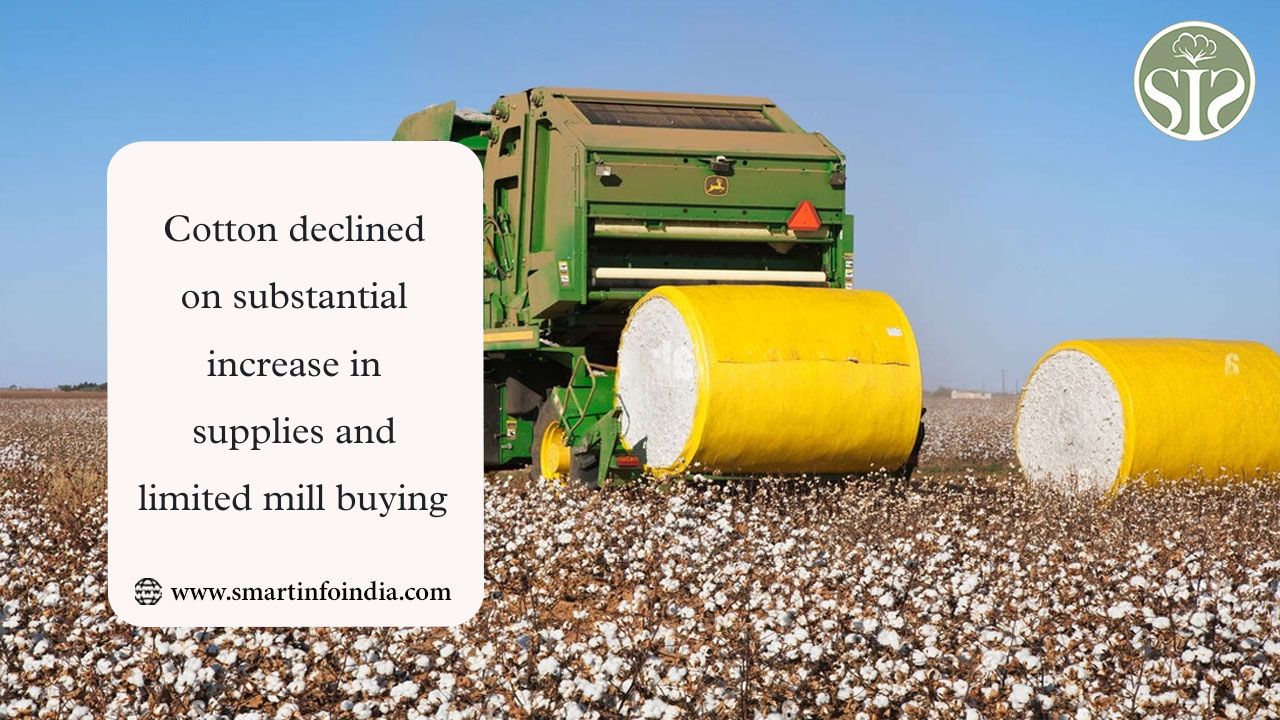
Cotton declined on substantial increase in supplies and limited mill buying .

Cotton fell as a result of limited mill purchases and a significant increase in supplies.Cotton candy prices fell 0.41% to 53,510 on increased supplies and weak mill buying. Mills have adequate stocks, reducing their immediate buying needs. Brazil's cotton production for 2024-25 is expected to increase by 1.6% to 3.7616 million tonnes, with a 4.8% expansion in planted area, indicating adequate global supply. Additionally, the Cotton Corporation of India (CCI) is expected to procure over 100 lakh bales at minimum support price (MSP) this season. The Cotton Association of India (CAI) estimates India's cotton production for 2024-25 to be 301.75 lakh bales, lower than 327.45 lakh bales in the previous season, mainly due to lower yields in Gujarat, Punjab and Haryana.Total cotton supply till January 2025 was 234.26 lakh bales, which includes 188.07 lakh bales of fresh pressing, 16 lakh bales of imports and opening stock of 30.19 lakh bales. Estimated cotton consumption till January 2025 is 114 lakh bales, including exports of 8 lakh bales, while ending stock is 112.26 lakh bales. CAI maintained its domestic consumption forecast at 315 lakh bales, while export forecast for 2024-25 is 17 lakh bales, lower than last season's 28.36 lakh bales.Technically, the market is witnessing long term liquidation, and open interest remains unchanged at 253. The prices have support at 53,200 and can likely test 52800 levels, while resistance is also at 53,860 and a move above this can take the prices towards 54200 levels.read more :-NBRI’s innovative chip to boost cotton cultivation

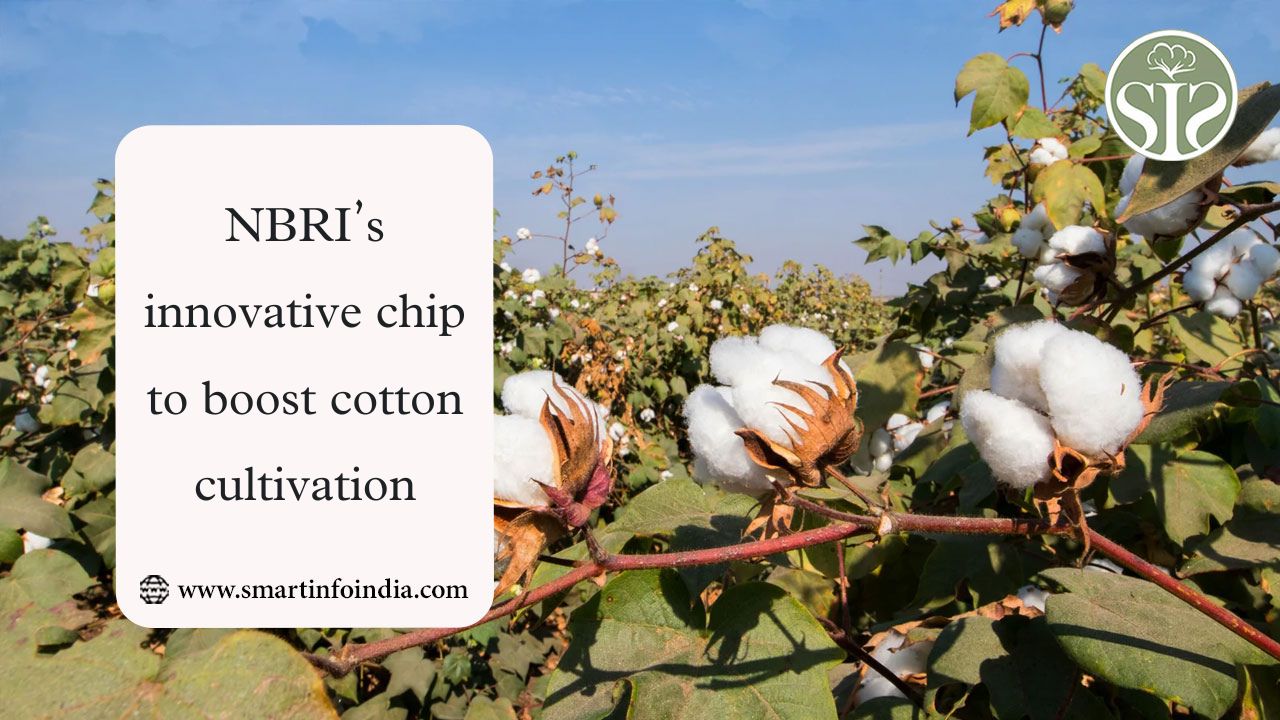
NBRI’s innovative chip to boost cotton cultivation

NBRI's cutting-edge chip to improve cotton farmingLucknow : CSIR-National Botanical Research Institute (NBRI), Lucknow, has developed a special chip that will assist scientists and farmers in cultivating superior cotton plants.Upon insertion of this ‘90K SNP Cotton Chip' in special equipment, it will provide data about various cotton varieties and their characteristics. The chip facilitates the development of high-quality cotton plants through marker-assisted breeding (MAB), a DNA-based approach. This utilises molecular markers to identify and choose plants with specific traits, creating new varieties."The chip contains data of around 90,000 cotton SNP markers, which can be used to crossbreed and create a new variety according to climatic, production or pest control needs. This is the first such chip in India, and its license was given to a Delhi-based company in the presence of CSIR director general N Kalaiselvi," said NBRI director Ajit Kumar Shasany.Explaining MAB or chip technology, Shasany said: "In agricultural production, we often aim to combine good traits from different plants to breed a new variety. Suppose we have a cotton plant with many seeds but fewer branches and is not drought or pest-resistant while another variety has fewer seeds but is drought and pest-resistant and has more branches. We can combine these two to breed a desirable variety."This may sound easy, but it's a herculean task as suitable varieties must be identified from thousands before crossbreeding. It may take months and even years. It's tough to determine which one is the best. The agricultural performance of plants is usually linked to traits that are encoded by DNA," he said.Shasany added that this chip was prepared by sequencing 320 cotton genotypes found in India, which resulted in 40 lakh single nucleotide polymorphisms (SNP), a variation in the DNA sequence at a single base position. Out of these, 90K SNPs were shortlisted as the best markers.This may sound easy, but it's a herculean task as suitable varieties must be identified from thousands before crossbreeding. It may take months and even years. It's tough to determine which one is the best. The agricultural performance of plants is usually linked to traits that are encoded by DNA," he said.Lucknow: CSIR-National Botanical Research Institute (NBRI), Lucknow, has developed a special chip that will assist scientists and farmers in cultivating superior cotton plants.Upon insertion of this ‘90K SNP Cotton Chip' in special equipment, it will provide data about various cotton varieties and their characteristics. The chip facilitates the development of high-quality cotton plants through marker-assisted breeding (MAB), a DNA-based approach. This utilises molecular markers to identify and choose plants with specific traits, creating new varieties."The chip contains data of around 90,000 cotton SNP markers, which can be used to crossbreed and create a new variety according to climatic, production or pest control needs. This is the first such chip in India, and its license was given to a Delhi-based company in the presence of CSIR director general N Kalaiselvi," said NBRI director Ajit Kumar Shasany.Explaining MAB or chip technology, Shasany said: "In agricultural production, we often aim to combine good traits from different plants to breed a new variety. Suppose we have a cotton plant with many seeds but fewer branches and is not drought or pest-resistant while another variety has fewer seeds but is drought and pest-resistant and has more branches. We can combine these two to breed a desirable variety.""This may sound easy, but it's a herculean task as suitable varieties must be identified from thousands before crossbreeding. It may take months and even years. It's tough to determine which one is the best. The agricultural performance of plants is usually linked to traits that are encoded by DNA," he said.Shasany added that this chip was prepared by sequencing 320 cotton genotypes found in India, which resulted in 40 lakh single nucleotide polymorphisms (SNP), a variation in the DNA sequence at a single base position. Out of these, 90K SNPs were shortlisted as the best markers.read more :-Rupee falls 16 paise at open to 87.31 against US dollar


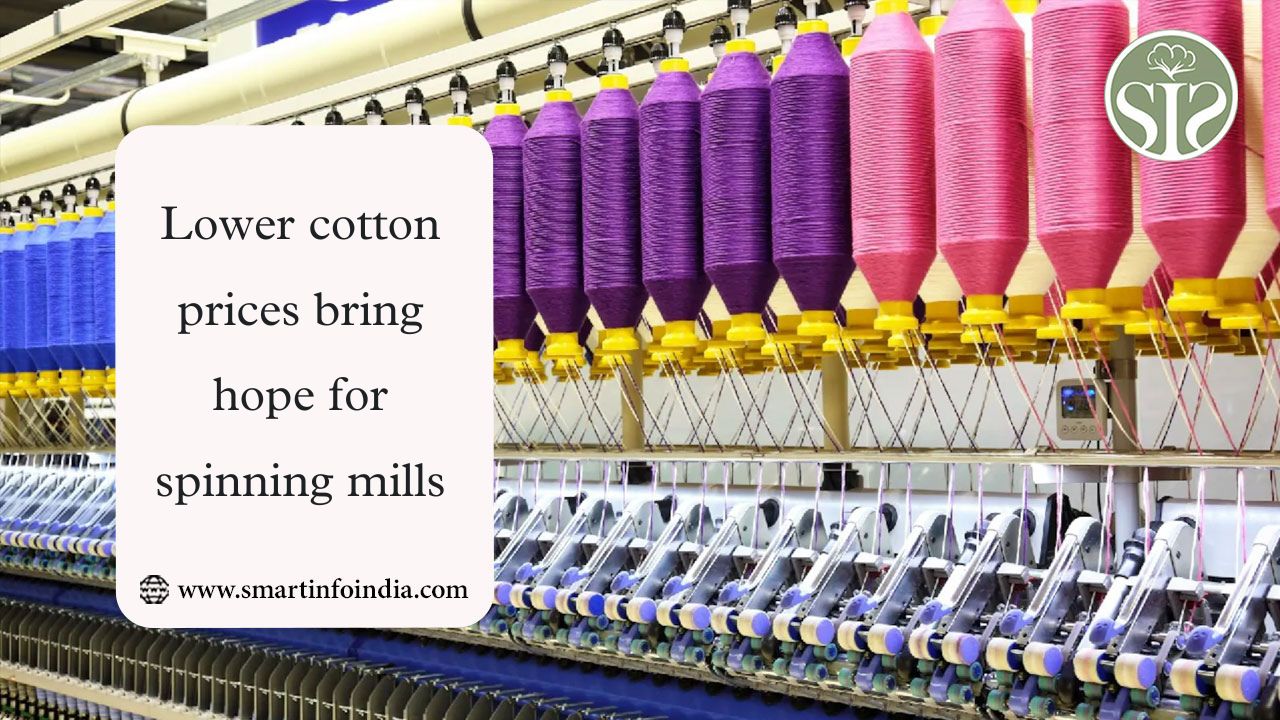
Lower cotton prices bring hope for spinning mills

A decrease in cotton prices gives spinning mills hope.Cotton prices in India have been on a downward trend in recent months. In fact, this is a matter of concern for cotton growers, but spinners are feeling good after struggling for several quarters.There are several reasons that support the forecast that cotton prices are likely to remain low for some time. The most important reason is that cotton production is expected to increase by 9% to 37.7 million bales during the current cotton year. A bale weighs 170 kg. Some northern states are expected to have bumper crops, while production in southern states has been affected due to pest attacks and unseasonal winter rains.At the same time, global cotton production is picking up. After a partial recovery in calendar year 2017 from a 13-year low in 2016, global production is forecast to pick up, showing a good growth of 11-13% in 2018. Therefore, both domestic and global conditions are supporting a decline in cotton prices.Meanwhile, a reduction in Chinese cotton imports following a policy change designed to support the domestic industry has upset the price cycle in international markets. China is one of the major consumers of cotton and cotton yarn.Any improved momentum in imports by China could support a recovery in global cotton prices. For the time being, this seems unlikely. Domestically too, hybrid-6 grade cotton is selling at Rs 107 per kg, much lower than the highs of Rs 130-140 per kg in August.With news of higher production after harvest in October, cotton prices are trending downwards. The question is whether any policy intervention will push prices higher, given the importance of farmers' vote in the upcoming general elections.Certainly, lower cotton prices bring relief to the spinning industry, which has recorded weak sales growth and profit margins in the last four quarters. Credit rating agency ICRA Ltd has explored the reasons for the pressure in spinning mills in a report: “In the quarter ended September 2016, volumes were impacted due to a sharp fall in exports to China, but the impact of demonetisation in the following quarter impacted volumes.ICRA’s sample of 13 spinning mills showed a weak trend in volumes in recent times and pressure on contribution margins, partly driven by volatile cotton prices. Overall operating profit of ICRA’s sample remained 6-12% lower than the healthy levels seen in FY13 and FY14, although 3% higher than FY16. No wonder yarn mills would be happy with the fall in cotton prices. However, ultimately currency movements and demand will remain the key determinants of profitability of yarn mills, especially exporters.read more :-Rupee falls 19 paise against the dollar to 87.39

Related News

Youtube Videos

कैसा रहा आज का कपास बाज़ार? 😱 Cotton Market Rate Today 28 Sep 2026
कैसा रहा आज का कपास बाज़ार? 😱 Cotton Market Rate Today 28 S...
साप्ताहिक कपास रिपोर्ट 😱 तेज़ी या मंदी? Weekly Cotton Market 26 Sep 2026
साप्ताहिक कपास रिपोर्ट 😱 तेज़ी या मंदी? Weekly Cotton Marke...
ऐसा रहा आज कपास बाज़ार 😱 महाराष्ट्र कपास बुवाई जानकारी | Cotton Market Rate Today 24 Sep 2026
ऐसा रहा आज कपास बाज़ार 😱 महाराष्ट्र कपास बुवाई जानकारी | Co...
Application Download
Whatsapp Contact