Recent News

Cotton Duty Waiver Boosts Gujarat Textile Sector

Relief for Gujarat's Textile Sector from Cotton Import Duty WaiverAhmedabad: Gujarat's textile industry has welcomed the Central Government's decision to suspend the 11% import duty on cotton until October 30. Industry stakeholders believe this move will reduce raw material costs and enhance the competitiveness of Indian textile products in the global market.In recent months, domestic cotton prices had surged to ₹68,500 per candy, driving up costs for spinning mills, fabric manufacturers, and garment exporters. The industry states that the duty waiver will improve cotton availability and help keep prices in check.Chintan Thaker, Chairman of the ASSOCHAM Gujarat State Council, noted that imports are primarily limited to Extra-Long Staple (ELS) cotton, which is not a substitute for Indian cotton. According to him, this decision will help reduce production costs for textile manufacturers and exporters. Furthermore, the availability of superior quality fiber will improve product quality and make it easier to meet the requirements of global brands.Rahul Shah, Co-Chairman of the Textile Committee at the Gujarat Chamber of Commerce and Industry (GCCI), stated that raw cotton prices have dropped by approximately ₹4,000 per candy following the announcement of the duty waiver. This will lower input costs for mills and improve operating margins, particularly for export-oriented companies.Jayesh Patel, Senior Vice President of the Spinners Association Gujarat (SAG), mentioned that while Indian spinning mills are receiving strong export orders from China and Bangladesh, high domestic cotton prices had posed a challenge. He believes the import duty waiver will ease pressure on cotton and yarn prices, enabling the Indian textile industry to become more competitive globally.read more :- Maharashtra Cotton Acreage Set to Rise

Maharashtra Cotton Acreage Set to Rise

Cotton Acreage Expected to Rise in Maharashtra for Kharif 2026-27Cotton cultivation acreage in Maharashtra is likely to increase by 10–15% during the Kharif 2026-27 season. According to Agriculture Department officials, farmers—particularly in the Vidarbha and Marathwada regions—are prioritizing cotton over soybean due to the sharp rise in cotton prices in both domestic and international markets.Officials state that better market demand and the prospect of higher profits are attracting farmers to cotton. Soybean growers suffered heavy losses last season; many had to sell their produce at ₹4,000–4,500 per quintal, well below the Minimum Support Price (MSP) of ₹5,328 per quintal. In contrast, cotton prices reached ₹9,000–9,500 per quintal in April and May, significantly exceeding the MSP.Ashok Bhutada, a farmer from Yavatmal, mentioned that he cultivated cotton on 16 acres last year and plans to expand this to 20–21 acres this time. He believes that amidst changing weather patterns and erratic rainfall, cotton has emerged as a relatively safer option compared to soybean.The Agriculture Department observes that this trend is visible across several districts in Vidarbha and Marathwada. However, experts have cautioned farmers against making decisions based solely on current high prices. Farmer leader Vijay Jawandhia notes that the current surge in cotton prices is linked to international market conditions, and there is no guarantee that prices will remain at this level by the time the crop hits the market.Despite cotton's growing popularity, associated risks remain. In 2025-26, cotton production in the state dropped by approximately 47% to 51 lakh metric tonnes, primarily due to excessive, unseasonal rainfall and hailstorms. Concerns regarding deficient rainfall in several districts persist for the upcoming season as well. Experts believe that high market prices alone are not sufficient to ensure farmers' income. Only an effective procurement system, fair prices, and better agricultural guidance can provide farmers with genuine economic security.read more :- Heavy Rain Alert in Kerala

Heavy Rain Alert in Kerala

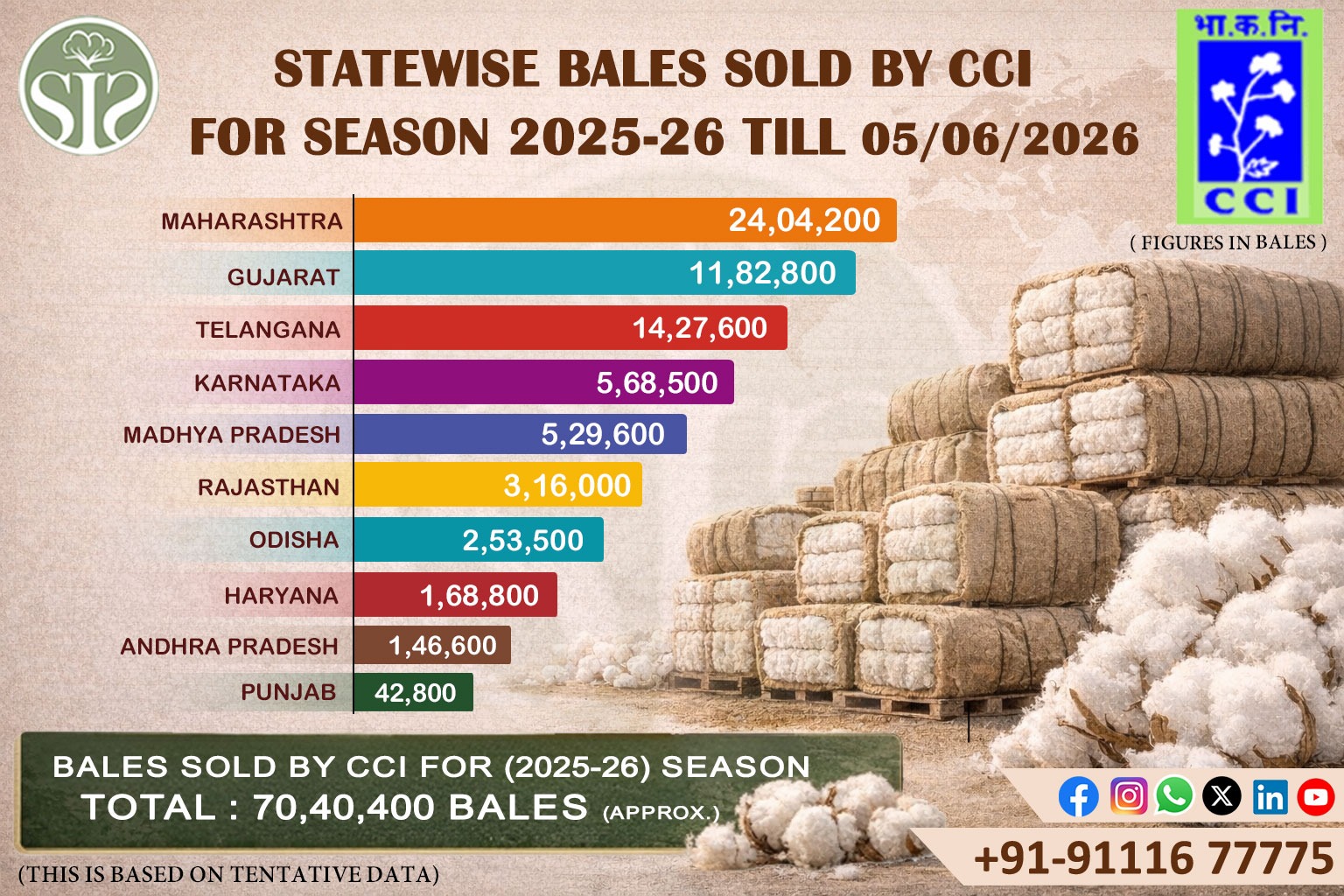
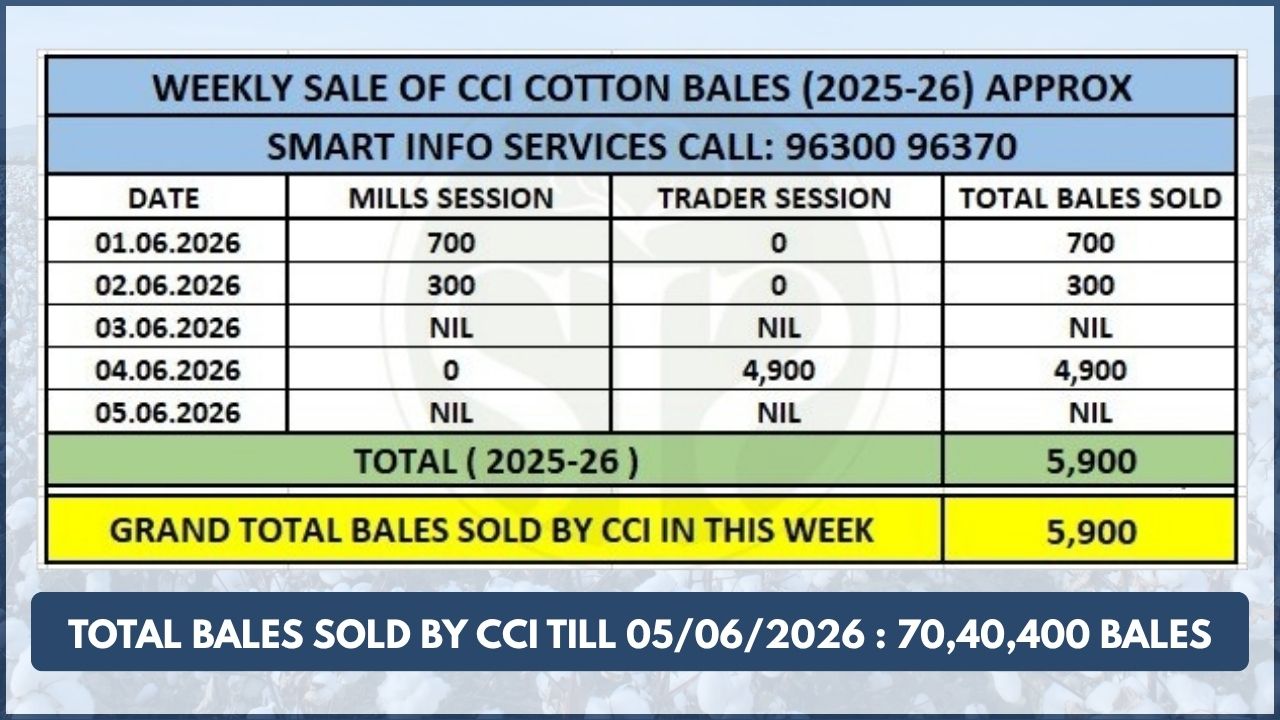
Monsoon Active in Kerala; Heavy Rain Warning for Next 7 DaysThe Southwest Monsoon arrived in Kerala on June 4, 2026, leading to an intensification of rainfall across the state. Several regions were already saturated due to pre-monsoon showers, and a spell of moderate to heavy rain has now commenced. According to the Meteorological Department, heavy rainfall is likely to continue in Kerala for the next week.June and July are considered the wettest months for Kerala. On average, the state receives around 650 mm of rainfall during this period, accounting for approximately 70 percent of the total monsoon season's rainfall. Consequently, this time of year is regarded as crucial and sensitive for the state.Impact of the Active System in the Arabian SeaA cyclonic circulation has developed in the mid-levels of the atmosphere—at an altitude of approximately 10,000 to 15,000 feet—over the east-central Arabian Sea, near the coasts of Goa and North Karnataka. This system has strengthened the monsoon's westerly winds, causing them to strike the Western Ghats with greater force and resulting in continuous rainfall.Heavy rainfall has been recorded over the past 24 hours in several districts, including Kochi, Kozhikode, Kottayam, and Kannur. The impact of this system has also been observed in the coastal regions of Karnataka, such as Honnavar and Karwar.Impact Likely to Intensify in the Coming DaysThe Meteorological Department forecasts that this cyclonic circulation will remain active for the next few days. While it is unlikely to evolve into a major, powerful storm system, it will keep the monsoon winds consistently active.There is a risk of heavy to very heavy rainfall across the entire Kerala coast, stretching from Thiruvananthapuram to Kozhikode. The intensity and spread of the rainfall are expected to increase further between June 7 and June 11, 2026. Risk of Floods and LandslidesContinuous rainfall has led to waterlogging in several areas and a rise in river water levels, while also increasing the likelihood of landslides in hilly regions. The administration has urged people to remain vigilant and avoid unnecessary travel.read more :- State-wise CCI Cotton Sales Update

Farmers May Shift from Maize to Cotton and Soybean

Farmers May Shift from Maize to Cotton and SoybeanAmidst the potential El Niño effect and forecasts of a below-normal monsoon, farmers' crop selection strategies for the Kharif season may undergo changes. According to a research report by CRISIL, farmers across various states are likely to select crops based on weather conditions, profitability, and market dynamics.The report indicates that maize-growing farmers in Rajasthan might shift towards soybean cultivation. Meanwhile, in Madhya Pradesh—the country's largest soybean-producing state—there is a possibility of some acreage currently dedicated to maize and soybean shifting to cotton, potentially increasing the state's total cotton area.Pushan Sharma, the lead author of the report, notes that while the total area under maize is expected to decline, the pattern of crop switching will vary by state. Farmers will consider factors beyond just rainfall forecasts, such as the relative profitability of crops, procurement support, and prevailing market conditions.The report highlights that higher temperatures and uneven rainfall during the early stages of the season could lead to increased pest and disease infestations in crops like cotton and soybean, posing a risk to production.However, water levels in the country's reservoirs remain above normal, which is expected to facilitate timely field preparation and sowing operations in key agricultural regions. Nevertheless, Kharif crop yields will largely depend on the distribution of monsoon rainfall, pest and disease management, and the availability of fertilizers.According to the report, faced with the prospect of below-normal rainfall, farmers will weigh risks against potential returns when selecting crops; consequently, the acreage for cotton and soybean may increase at the expense of maize in certain regions.read more :- The rupee ended 78 paise higher at 94.94 against the dollar.

Tamil Nadu Textile Industry Could Save ₹3,250 Crore Annually Through Renewable Energy: Report

Report: Tamil Nadu’s textile industry could save up to ₹3,250 crore annually by adopting renewable energyAccording to a new report by the Bengaluru-based think tank Climate Risk Horizons, Tamil Nadu’s textile industry could save between ₹1,560 crore and ₹3,250 crore annually by transitioning to clean energy. The study assesses the status and potential of the industry's decarbonization based on data from the 'Annual Survey of Industries' (ASI) over the past decade.The report states that if the industry were to switch entirely to renewable electricity, annual savings could range from ₹2,320 crore to ₹3,250 crore. The study notes that rising energy and fuel costs have become a primary factor driving up textile production costs in the state.Rakesh Ranjan, a co-author of the report, stated that escalating fuel costs are impacting the competitiveness of Tamil Nadu’s textile industry. He pointed out that the state's textile exports have remained stagnant at around $7.4 billion since 2017. According to him, adopting renewable energy would lower costs and strengthen the industry's global competitiveness.The report also highlights that the total energy expenditure of the state's textile sector has nearly doubled over the last four years. Additionally, there has been an increase in the ratio of fuel costs to production output. The study reveals that India's textile industry has the highest carbon footprint compared to major exporting nations, exceeding 12.5 kg of CO₂e per kilogram of textile produced.The report suggests that the industry could reduce both production costs and carbon emissions by adopting renewable energy-based electric heating. It also recommends that the state government and electricity regulatory bodies facilitate easier access to renewable energy, particularly for MSME units. This version is more streamlined and edited in the formal style of news writing.read more :- Haryana Farmers Abandon Cotton Cultivation as Acreage Falls 65% in Seven Years 

Haryana Farmers Abandon Cotton Cultivation as Acreage Falls 65% in Seven Years

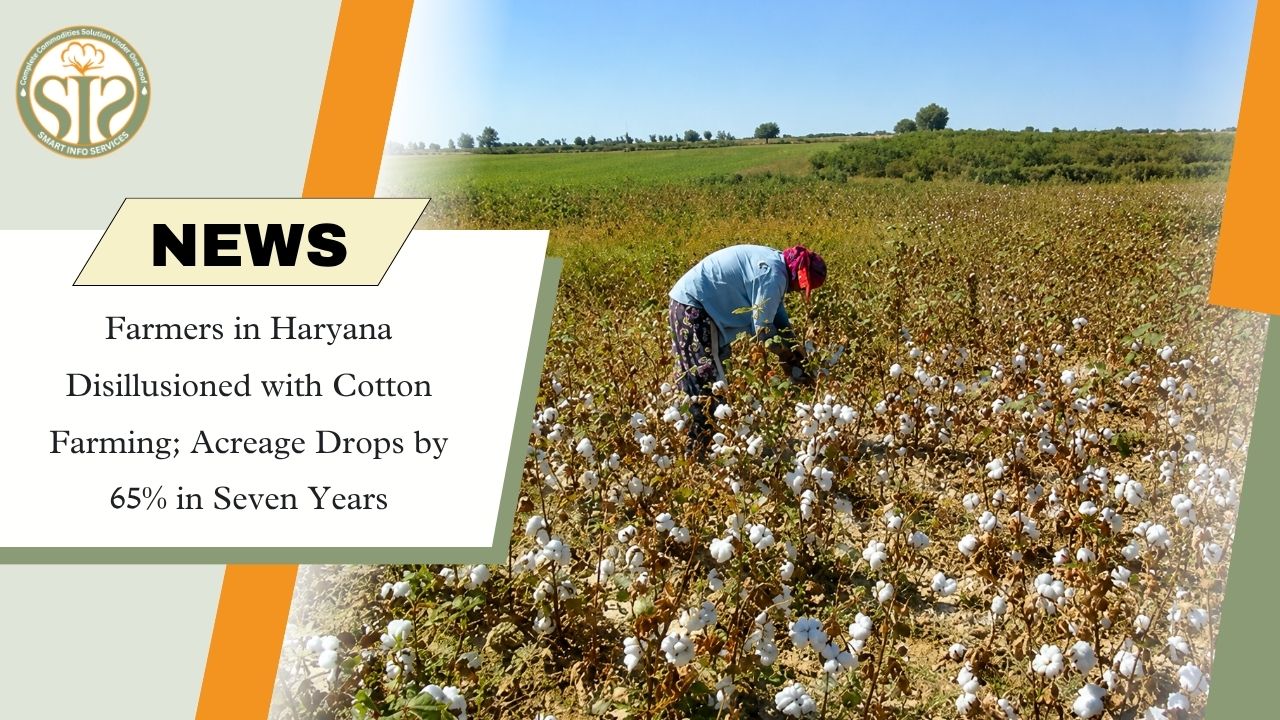
Farmers in Haryana Disillusioned with Cotton Farming; Acreage Drops by 65% in Seven YearsHisar – Cotton, once considered a major cash crop for farmers in Haryana, is currently facing a crisis. Farmers are turning away from cotton cultivation due to persistent financial losses, the growing menace of the pink bollworm, and heavy crop damage caused by rainfall. The impact of this shift is clearly visible in the state's cotton acreage.In the 2019-20 season, cotton was cultivated across 8.01 lakh acres in Haryana; by 2025-26, this figure had dropped to just 2.84 lakh acres. In other words, the area under cotton cultivation has shrunk by approximately 65 percent over seven years. The cultivated area has nearly halved in the last three years alone. This season, the area sown with cotton has hit its lowest level in eight years.The Agriculture Department has made several efforts to promote cotton cultivation. Awareness programs were conducted in major cotton-producing districts under the 'Promotion for Cotton Cultivation in Haryana' campaign. Financial assistance of ₹2,000 per acre for micronutrients and ₹4,000 per acre for cultivating indigenous cotton varieties is also being provided to farmers. Despite these measures, farmers remain reluctant to return to cotton farming.According to Dr. Atma Ram Godara, Joint Director (Cotton), farmers have been incurring consistent losses in cotton cultivation over the past few years. Rainfall during August and September causes the most significant damage to the crop, while the infestation of the pink bollworm remains a major challenge.A report by Dr. Vinay Mahla, an agricultural scientist at Haryana Agricultural University, indicates that the average cost of cotton cultivation for farmers was ₹40,024 per acre, whereas the total income from sales and by-products was only ₹24,882. Consequently, farmers suffered an average loss of ₹15,142 per acre. Experts believe that if better and pest-resistant varieties are not developed, the scope of cotton cultivation in the state could shrink further in the coming years.read more :- Rupee Opens 7 Paise Higher Against US Dollar at 95.72

Related News

Youtube Videos

आज के कपास के भाव 😱 गुजरात कपास बुवाई अपडेट 🔥Cotton Rate Today 22 Sep 2026

आज के कपास के भाव 😱 गुजरात कपास बुवाई अपडेट 🔥Cotton Rate T...
जानिए आज का कपास बाज़ार 😱 Cotton market rate today #kapas #cotton
जानिए आज का कपास बाज़ार 😱 Cotton market rate today #kapas #c...
रुई के भाव में लगातार गिरावट 😱 क्या आगे भी रहेगी मंदी? | Cotton Market
रुई के भाव में लगातार गिरावट 😱 क्या आगे भी रहेगी मंदी? | Co...
Application Download
Whatsapp Contact