Recent News

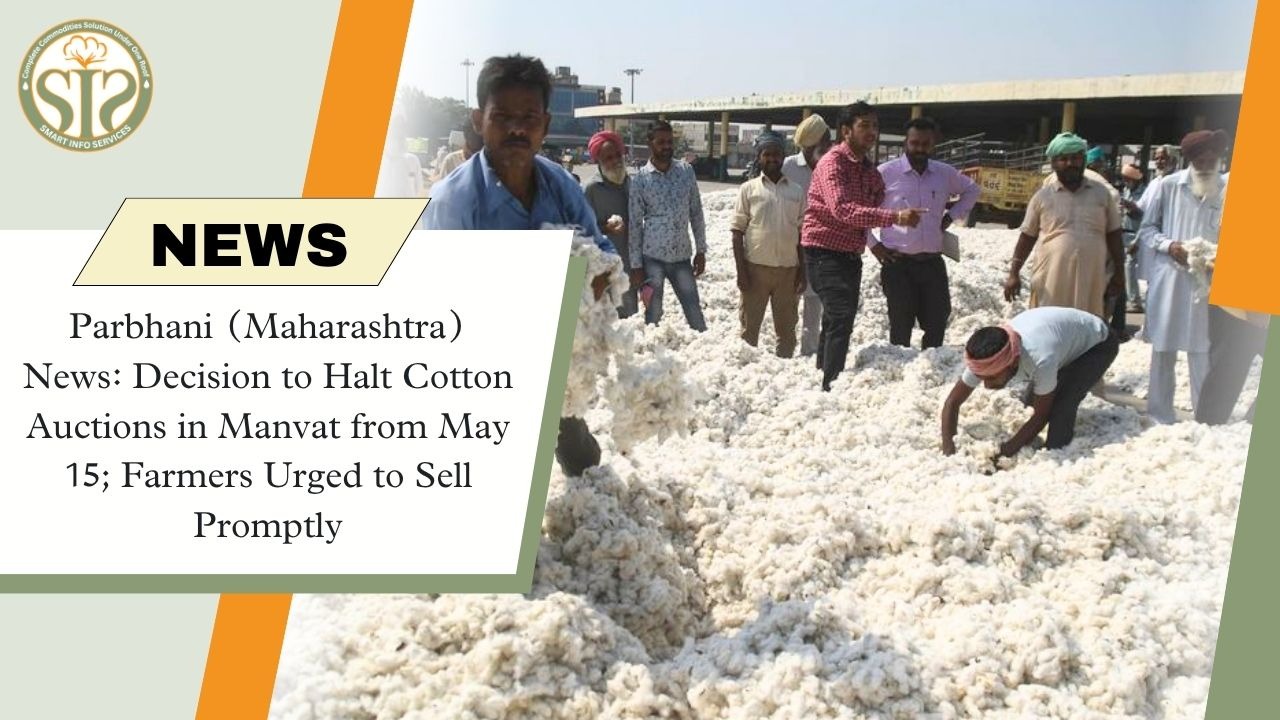
Parbhani (Maharashtra) News: Cotton Auctions in Manvat Suspended from May 15; Farmers Urged to Sell Promptly.

Parbhani (Maharashtra) News: Decision to Halt Cotton Auctions in Manvat from May 15; Farmers Urged to Sell PromptlyThe Manvat Agricultural Produce Market Committee (APMC) in the Parbhani district of Maharashtra has announced that the ongoing cotton auction process at the Chhatrapati Shivaji Yard will be suspended starting May 15. This decision has been taken in view of the escalating heat and the fact that the season is drawing to a close. The administration has appealed to farmers to sell their cotton through the auction process before May 15.The cotton auctions commenced during the second week of November. Initially, cotton prices hovered below the Minimum Support Price (MSP); consequently, the Cotton Corporation of India (CCI) procured 163,000 quintals of cotton at the guaranteed rate by the first week of February.Subsequently, the market witnessed a steady upward trend in prices—on February 5, the rate stood at ₹7,190 per quintal, rising to ₹7,325 by the end of February. The rate climbed further in March; cotton was sold at ₹7,430 per quintal on March 8 and at ₹7,525 on March 13. The bullish trend persisted through the final week of March and into April, with prices breaching the ₹8,000 mark.On April 20, cotton prices touched ₹8,800, and after April 22, they surged past the ₹9,000 threshold. On May 2, the average price was recorded at ₹9,330 per quintal, rising to ₹9,400 on May 4.According to the APMC administration, since prices remained low during the initial phase of the season, approximately 80 percent of farmers had already sold their produce. The market subsequently rallied, leading to a significant surge in prices during the final phase. This turn of events left those farmers who had sold their produce earlier feeling a sense of loss.APMC Chairman Pankaj Ambegaonkar stated that the situation would be reviewed after May 15, and a decision regarding the resumption of auctions would be taken based on the prevailing circumstances.read more :- The rupee closed 04 paisa higher against the dollar at 95.29

Cotton Prices Surge 4%, Nearing Two-Year High

Sharp 4% Surge in India's Cotton Prices; Nearing Two-Year HighsCotton prices in India have recorded a sharp increase of over 4% in a single day—marking what is considered the largest daily surge of the current season. Strength in the global market and disruptions in supply chains are cited as the primary reasons for this rise.On Monday, the Cotton Corporation of India (CCI) hiked cotton prices by ₹2,900 per candy (356 kilograms). With this adjustment, prices have edged closer to a two-year high. In the international market, cotton futures for July delivery on ICE Futures U.S. rose above 84.5 cents per pound.Since the beginning of March, international cotton futures have witnessed a surge of over 28%. Domestically, too, prices have risen from a low of ₹54,600 per candy to reach approximately ₹65,600.According to trade sources, the price hike implemented by the CCI was unexpected; nevertheless, the corporation has successfully sold over 200,000 bales. Industry insiders note that the escalating prices have heightened concerns among textile manufacturers. Both production and delivery schedules are being adversely affected by rising yarn costs and a shortage of labor.International demand is also providing support to prices. In recent weeks, demand for Indian cotton yarn has surged in countries such as China, Bangladesh, and Vietnam—a trend attributed to ongoing disruptions within global supply chains.According to experts, the CCI currently holds a residual stock of approximately 4 million bales, and given the continued strength of international prices, sales are expected to persist. At present, the CCI's pricing remains globally competitive, a factor that could potentially boost interest among multinational corporations.Meanwhile, daily arrivals of raw cotton across the country remain steady at between 35,000 and 45,000 bales, bringing the total cumulative arrivals to approximately 30.5 million bales. It is estimated that supply may remain stable in the coming months, which will impact the direction of the market.read more :- The Rupee opened at 95.33 registering a decline of 25 paise.

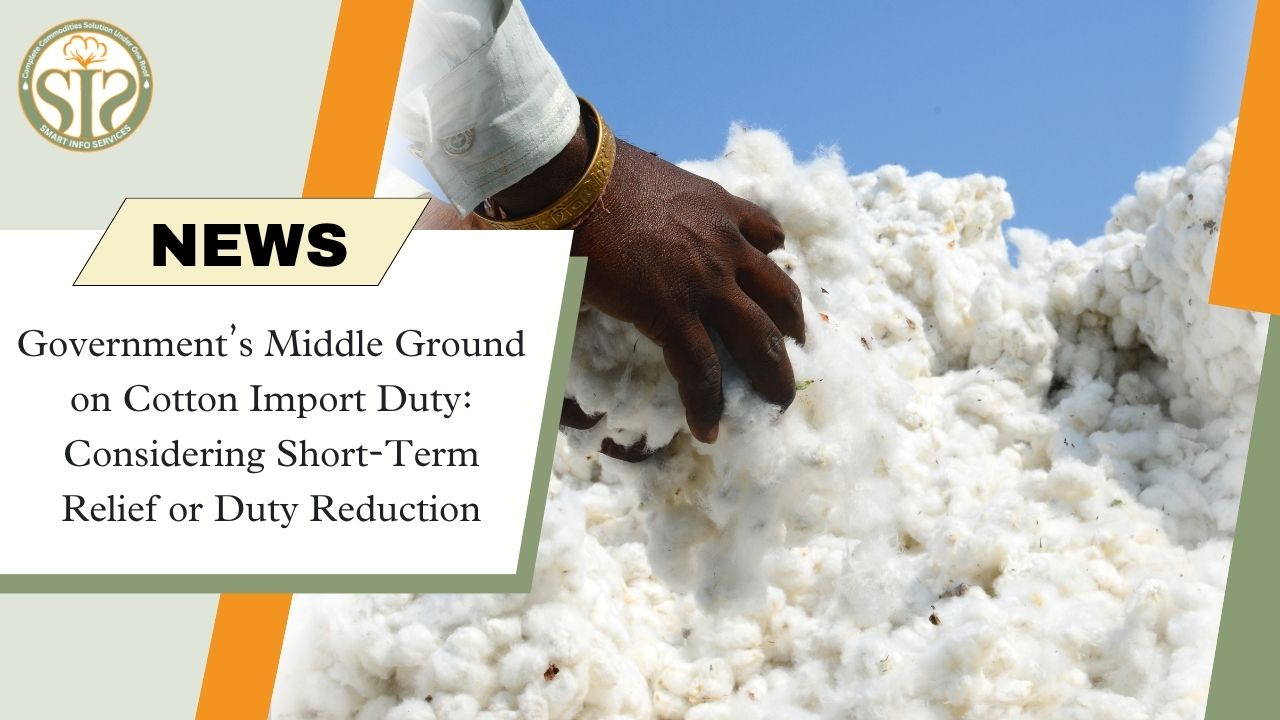
Consideration of Limited Exemption on Cotton Import Duty

Government’s Middle Ground on Cotton Import Duty: Considering Short-Term Relief or Duty ReductionUnion Agriculture Minister Shivraj Singh Chouhan has signaled a move toward finding a "middle ground" amidst the ongoing differences between the industry and the Ministry of Agriculture regarding cotton import duties. The textile industry had demanded zero import duty on cotton until December 2026, a proposal that the Ministry of Agriculture has been opposing. The Ministry argues that such a move would send a negative signal to farmers, particularly at a time when cotton sowing has already commenced.According to sources, one potential option under consideration is to permit zero-duty imports for a limited duration during the September-October period, as domestic stocks are deemed sufficient to meet demand until August. A second option involves reducing the existing 11% import duty to approximately 6–7%.During a high-level meeting attended by officials from the FIEO and various government ministries, it was noted that the Cotton Corporation of India currently holds a stock of approximately 47 lakh bales of cotton. When combined with private sector stocks, the country is well-positioned to meet domestic demand until August.However, the industry argues that domestic prices remain high, thereby driving up production costs and undermining export competitiveness. Conversely, with the new harvest expected to arrive starting in October, the government must make a decision that carefully balances both short-term and long-term considerations.Cotton production for the 2025–26 season is projected to decline to approximately 290.91 lakh bales, down from 297.24 lakh bales in the previous year. The acreage under cultivation is also shrinking—a trend attributed to pest infestations, a shift toward alternative crops, and the expectation of better financial returns elsewhere.According to the Cotton Association of India, for the upcoming season, production is projected to reach 324 lakh bales, consumption is estimated at 315 lakh bales, and imports could rise to 47 lakh bales. Against this backdrop, the government aims to strike a delicate balance between the needs of the industry and the interests of the farmers.read more :- Clothing prices have risen in Gujarat's textile industry due to increased costs.

Clothing prices have risen in Gujarat's textile industry due to increased costs.

Rising Cotton Yarn Prices and Processing Costs Drive Up Clothing Prices in GujaratThe pressure of rising costs on Gujarat's textile industry has become clearly evident. Driven by strong demand for cotton yarn from China and Bangladesh, prices have surged to a record high of ₹300 per kilogram—a level not seen in nearly four years. This impact has reverberated across the entire textile value chain, leading to an increase in clothing prices and a shortage of supply in the market.According to industry experts, clothing prices have risen by ₹10 to ₹25 per meter over the past month and a half. The primary reasons behind this are not limited to the rising cost of yarn alone; an increase in processing charges has also played a significant role. A surge in fuel and chemical prices has made textile processing more expensive, while the closure of several powerloom units has adversely affected production output.Traders report that this cost escalation has now reached the retail level, and consumers are consequently facing higher prices for clothing. However, manufacturers believe that the impact on the domestic market may remain limited, as the majority of the stock for the current season has already reached the market. Furthermore, there remains scope to renegotiate prices for the upcoming season. It is estimated that retail prices could witness an increase of 5% to 8%.Conversely, the export sector is feared to face a negative impact, as it is difficult to pass on these increased costs to clients due to pre-existing contracts. The industry has also expressed concern regarding the high prices and limited availability of raw cotton, urging the Central Government to waive the 11% import duty currently in place.Rising logistics costs, shipping delays, and the pressure of global competition have further exacerbated the situation. If conditions do not improve, the repercussions on production, exports, and employment could be widespread.read more :- Cotton Cultivation in Crisis Due to Extreme Heat; Pre-Monsoon Sowing Increases

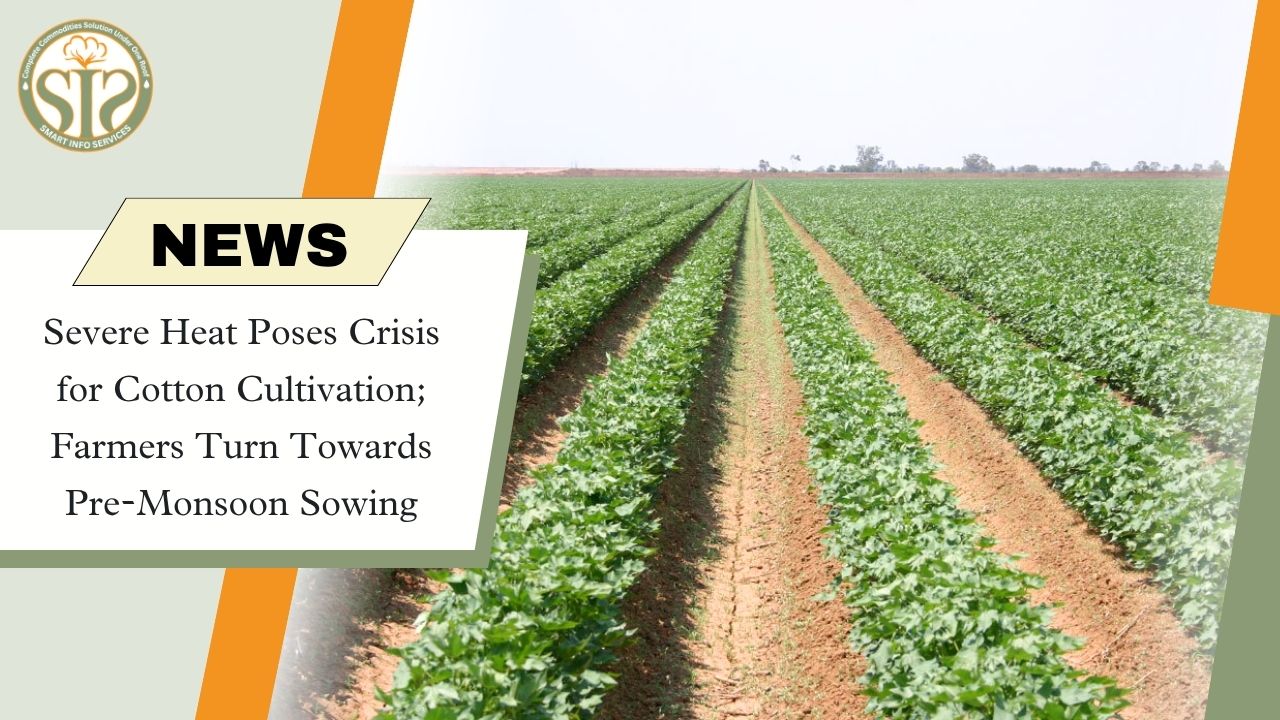
Cotton Cultivation in Crisis Due to Extreme Heat; Pre-Monsoon Sowing Increases

Severe Heat Poses Crisis for Cotton Cultivation; Farmers Turn Towards Pre-Monsoon SowingThe severe heat gripping Akola district this year has created a grave crisis for cotton cultivation. Since the month of April, temperatures have hovered around 44 degrees Celsius, while in several regions, they have even soared to 47 degrees. Under these circumstances, sowing cotton during the summer season has become an extremely risky endeavor for farmers.Due to the scorching sun and rising temperatures, the soil surface is becoming excessively hot, thereby increasing the risk of sown seeds burning up or perishing before they even get a chance to germinate. This situation has deepened the anxieties of farmers, prompting many to steer clear of cotton cultivation during the current summer season.Furthermore, the water crisis is also intensifying rapidly. Water levels in wells, ponds, and borewells are plummeting fast, resulting in an acute shortage of water available for irrigation. Consequently, even farmers engaged in horticulture are beginning to withdraw from cotton cultivation.In light of these challenges, farmers are now increasingly gravitating towards pre-monsoon sowing. They believe that if cultivation is undertaken at the right time and under favorable weather conditions, the yield could be significantly better.The Agriculture Department has also advised farmers to refrain from sowing cotton until temperatures subside. Hasty decisions could lead to financial losses. Additionally, concerns have been raised regarding the potential for an increased infestation of pests amidst the extreme heat.If the intense heat persists over the coming weeks, it could have a direct impact on cotton production. Therefore, farmers should formulate their cultivation plans strictly based on weather forecasts and expert advice.read more :- The Rupee opened at 94.95 down 3 paise.

Related News

Youtube Videos

रुई बाज़ार में गिरावट का रुख 😱 Cotton Market Rate Today | 23 Sep 2026
रुई बाज़ार में गिरावट का रुख 😱 Cotton Market Rate Today | 2...
आज के कपास के भाव 😱 गुजरात कपास बुवाई अपडेट 🔥Cotton Rate Today 22 Sep 2026
आज के कपास के भाव 😱 गुजरात कपास बुवाई अपडेट 🔥Cotton Rate T...
जानिए आज का कपास बाज़ार 😱 Cotton market rate today #kapas #cotton
जानिए आज का कपास बाज़ार 😱 Cotton market rate today #kapas #c...
Application Download
Whatsapp Contact