Recent News

Big decision today on Trump tariffs

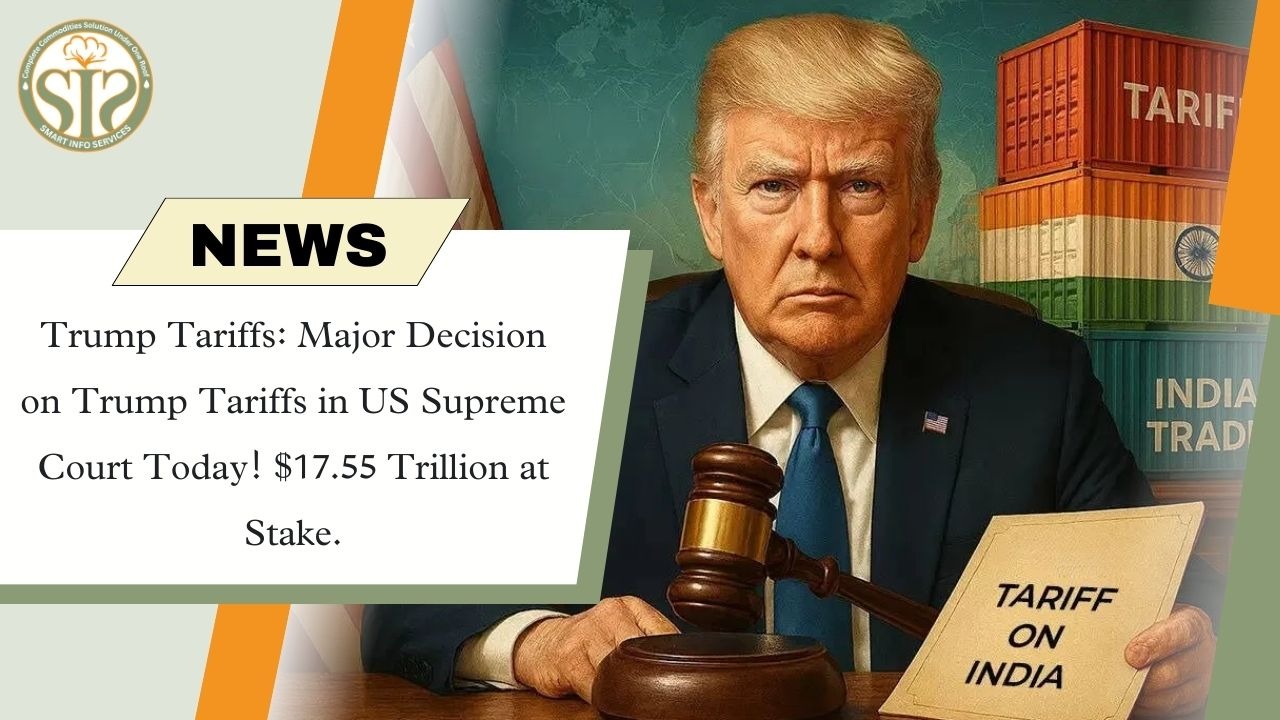
Trump Tariffs: Major Decision on Trump Tariffs in US Supreme Court Today! $17.55 Trillion at Stake.Today is a crucial day in the United States. The Supreme Court could rule on Trump's mega-tariff policy – the very tariffs that Trump himself calls his favorite word. The court will decide whether the government has the authority to impose such heavy tariffs under the IEEPA (International Emergency Economic Powers Act), and if not, whether the government will have to refund importers. This is not just a legal battle, but a decision that will have a significant impact on America's trade policy, fiscal situation, and global markets.What's at Stake?There are two major questions in this case: Can the Trump administration impose tariffs under the IEEPA? If the court rules that this method was incorrect, will the government have to refund importers?However, experts believe that the court's decision will not be an all-or-nothing outcome. That is, neither complete authority will be granted, nor will all power be taken away – a middle ground is likely. There is also a possibility that the court will grant the government limited authority under the IEEPA and also limit the refunds to be returned.What is the White House thinking?US Treasury Secretary Scott Bessent has clearly stated that they are anticipating a mixed decision. According to him, "Our tariff collection will continue, there is no doubt about that. The real danger is that the president's power will be diminished – in both national security and negotiations." Trump primarily used the IEEPA to curb the import of fentanyl.Bessent says that even if the court stops the tariffs, the administration has at least three other avenues under the 1962 Trade Act through which most tariffs can continue. However, if the government has to issue refunds, it could put pressure on efforts to reduce the fiscal deficit.What are the market and economists saying? Interactive Brokers' senior economist, Jose Torres, believes that if the court removes the tariffs, the administration will find another way. Trump's agenda is very strong, and he wants to push it forward at all costs. Torres said that his clients also believe the administration has several backup options.Prediction market Kalshi's opinion: Only a 28% chance that the court will rule in Trump's favor. CNBC also quoted analysts as saying that whether the court blocks or limits the tariffs, the White House will find a workaround.Impact of Tariffs - Analysts SurprisedMany analysts expected that the tariffs would increase inflation and worsen the trade deficit. But the opposite happened—almost no impact on inflation, the trade deficit is at its lowest level since 2009, and the October trade gap reached a record low—which is completely contrary to analysts' forecasts.read mare :- The government has launched a district-based textile scheme for export champions.

The government has launched a district-based textile scheme for export champions.

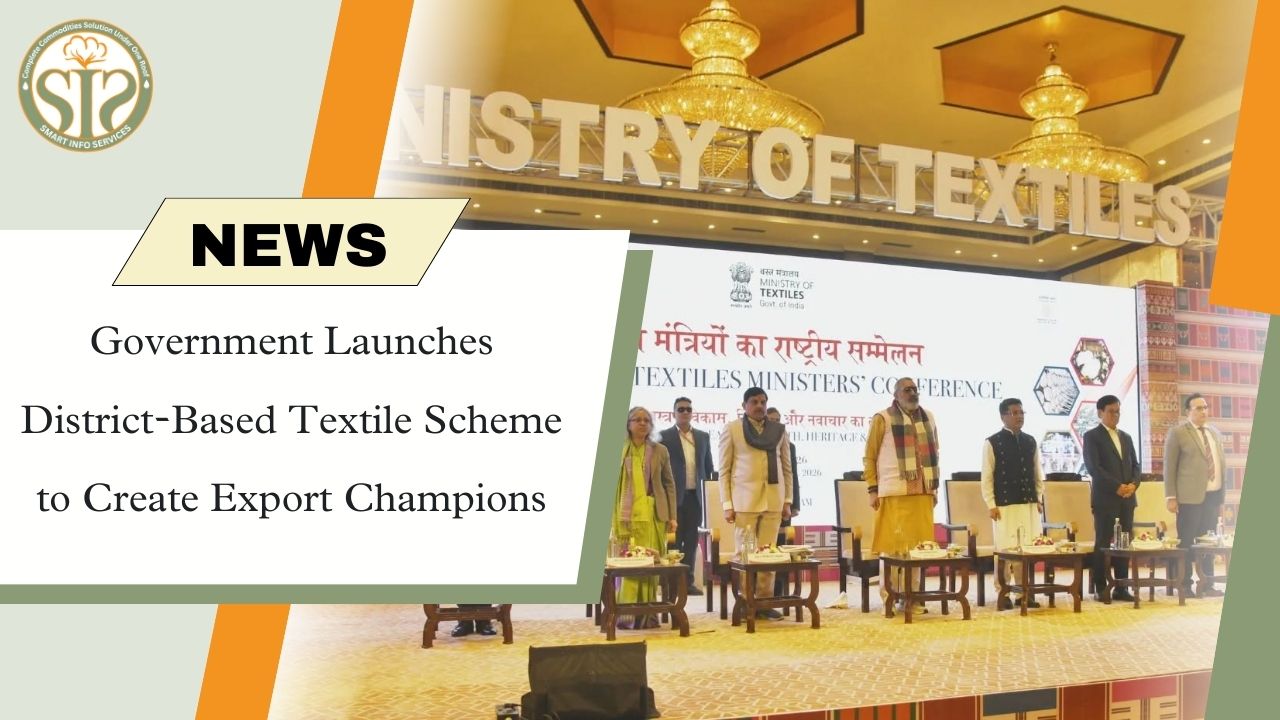
Government Launches District-Based Textile Scheme to Create Export ChampionsLaunched at the National Conference of Textile Ministers in Guwahati, this initiative adopts a district-level, sector-specific approach to develop 100 high-potential districts into global export champions and upgrade 100 aspirational districts into self-reliant hubs.The government on Thursday unveiled the District-Led Textile Transformation (DLTT) scheme, a strategic initiative designed to catalyze inclusive and sustainable growth in India's textile landscape.The Ministry of Textiles launched the initiative at the National Conference of Textile Ministers in Guwahati."By shifting to a sector-specific, district-level approach, the Ministry aims to transform 100 high-potential districts into global export champions and elevate 100 aspirational districts into self-reliant hubs," the Ministry of Textiles said.The Ministry analyzed all districts using a data-driven scoring methodology based on three key parameters: export performance, MSME ecosystem, and workforce presence.This was then formulated into a two-pronged strategy, where districts were categorized into Champion Districts and Aspirational Districts. The scheme follows a tailored implementation framework based on the district's category.The initiative also emphasizes the Purvodaya convergence in the Eastern and North-Eastern regions.These regions have been prioritized for tribal belt development, connectivity improvements, and Geographical Indication (GI) tagging to position unique cultural handicrafts in premium global markets.Through the strategic convergence of government resources and collaborative partnerships with industry and academia, the program aims to strengthen textile clusters and systematically build successful models to maximize impact across districts, the Ministry said.read more :- INR Opens Stronger by 14 Paise at 89.88

Bangladesh considers tariff on Indian cotton yarn

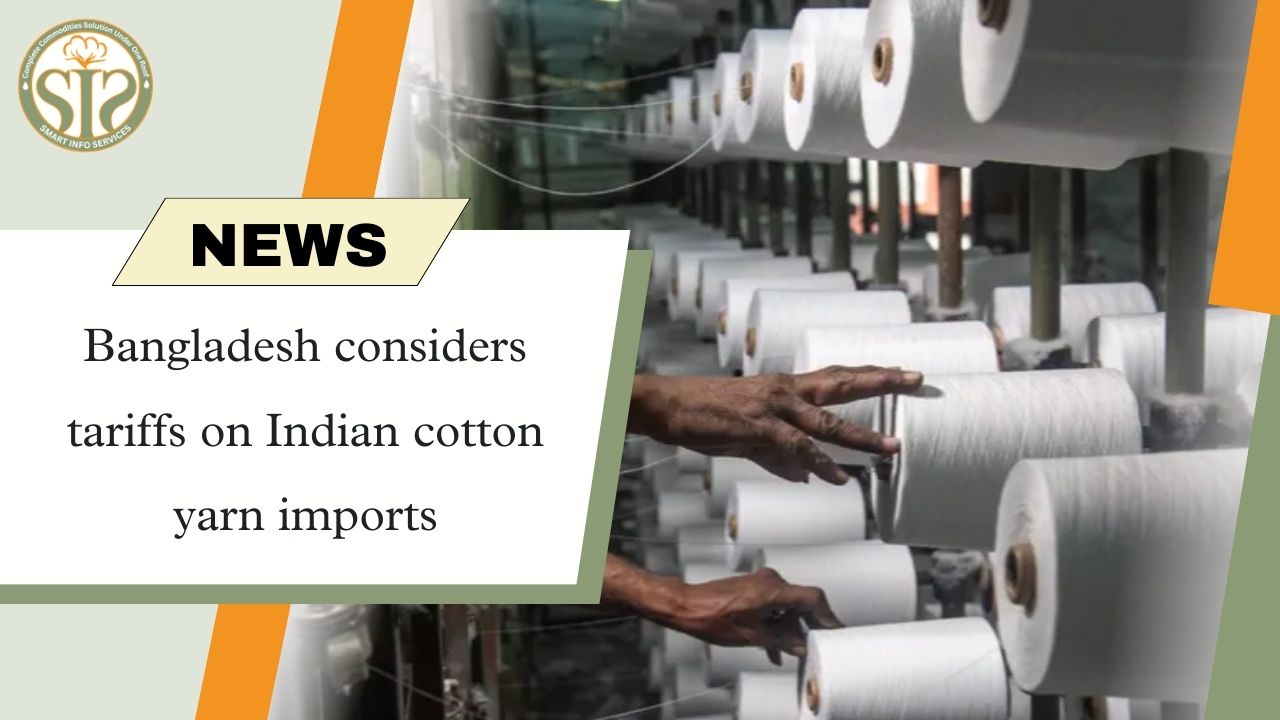
Bangladesh considers tariffs on Indian cotton yarn importsNEW DELHI : Bangladesh is mulling tariffs on Indian cotton yarn imports, with the Bangladesh Trade and Tariff Commission discussing this on January 5, Indian yarn industry executives said on Wednesday, citing Bangladeshi trade reports, against the backdrop of deteriorating bilateral relations.Bangladesh tariffs on Indian yarn could hit domestic prices, mills, and farmers, analysts said.Levies by Bangladesh, the world’s largest importer of raw cotton, on yarn imports from India, its largest supplier, could weaken domestic prices, hitting mills and farmers here, analysts said.India has been sheltering former Bangladesh PM Sheikh Hasina since she fled Dhaka in mid 2024 following student-led protests, and a harsh crackdown by security forces that killed hundreds but only served to intensify the agitation against her. She has been sentenced to death, in her absence, by a Bangladesh tribunal.Meanwhile Dhaka has grown closer to both Beijing and Islamabad, several of its leaders, including its interim head of government Mohammed Yunus, have made intemperate comments about India, and New Delhi has condemned a string of recent murders of Hindus in Bangladesh, while the interim government of the neighbouring country continues to press for an extradition of its toppled leader, to which India has remained non-committal.The latest spat between the two countries involved the participation of a Bangladesh cricketer in the Indian Premier League. After protests in India forced the Indian cricket board to ask the team that signed him on to release him, Dhaka said it would not travel to India for a major cricket tournament, citing security concerns.The strained ties could impact trade with India, which was Bangladesh’s third-biggest trading partner in 2024. This may impact goods worth around $770 million, amounting to nearly 42% of Bangladesh’s exports to India, according to a May 2025 analysis of the Global Trade Research Initiative.“Bangladesh is considering imposing duties on Indian yarn. Last year, it restricted yarn imports. This will impact markets in India,” said Atul Ganatra, a former president of the Cotton Association of India.In April last year, Bangladesh banned import of yarns from India via land ports through a notification by the National Board of Revenue. This came barely days after the country announced a ban on the import of several Indian commodities, including newsprint, cigarette paper, duplex board, potatoes, powdered milk and components for television sets and radios. In May 2025, India imposed curbs on imports of ready-made garments and processed foods from Bangladesh.In its January 5 meeting, the Bangladesh Trade and Tariff Commission reviewed cotton and cotton yarn imports from India and discussed a specific proposal to impose tariffs, said Amrit Kota of Gayatri Impex Ltd, a Mumbai-based exporter of yarn.India exported cotton yarn valued at $3.57 billion in 2025, of which Bangladesh was the largest recipient, accounting for about 45.9% of its total yarn shipments. India is the largest supplier of cotton yarn to Bangladesh, which feeds its large spinning industry, while China is the top exporter of finished fabric to the country.

Giriraj Singh, Mohan Yadav attend Guwahati Textile Ministers Conference

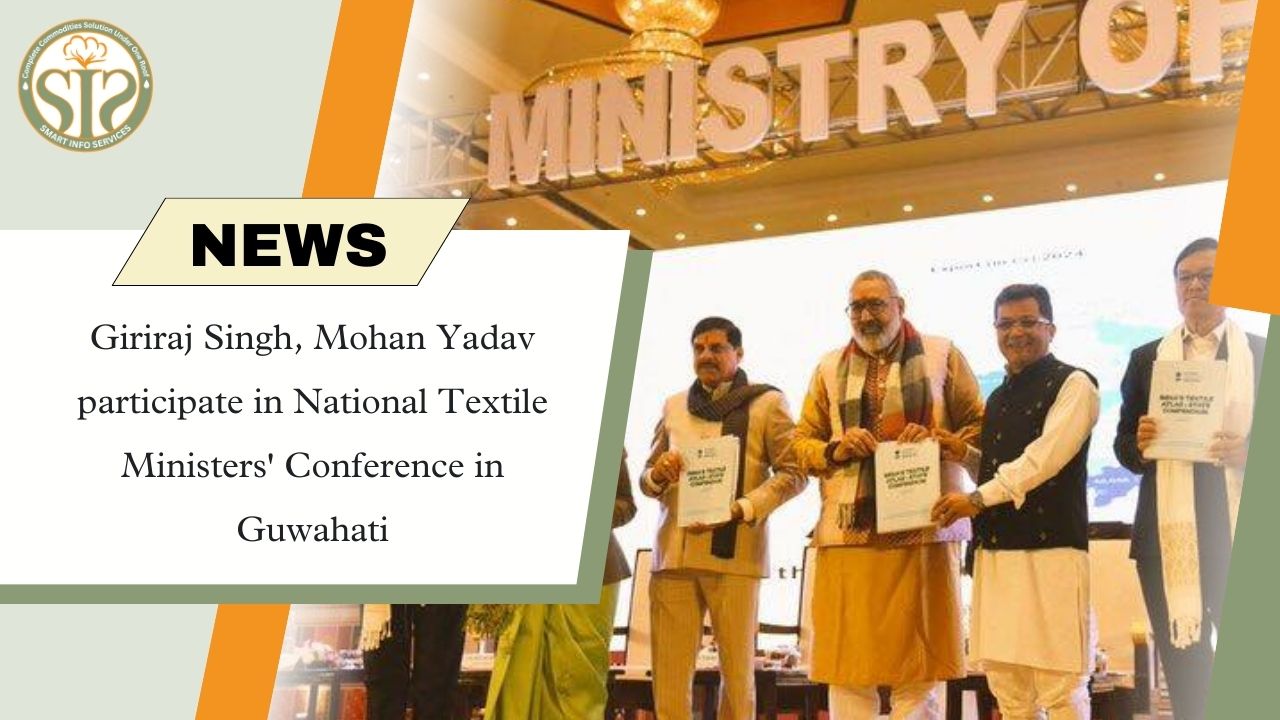
Giriraj Singh, Mohan Yadav participate in National Textile Ministers' Conference in GuwahatiGuwahati: Union Textiles Minister Giriraj Singh and Madhya Pradesh Chief Minister Mohan Yadav participated in the National Textile Ministers' Conference 2026 in Guwahati on Thursday.On the occasion, Singh and Yadav, along with Union Minister of State for Textiles Pabitra Margherita, inaugurated a handloom and handicrafts exhibition showcasing India's art, traditions, and craftsmanship.In a post on the social media platform X, Singh said the exhibition offers a powerful glimpse into India's heritage and reflects the vision of strengthening tradition while ensuring continuous development."Today, during the National Textile Ministers' Conference in Guwahati, inaugurated the Handloom and Handicrafts Exhibition along with the Hon'ble Chief Minister of Madhya Pradesh, Dr. Mohan Yadav, and the Hon'ble Minister of State for Textiles, Shri Pabitra Margherita. This exhibition offers a powerful glimpse into India's art, tradition, and craftsmanship. Our vision is clear – to ensure that India's heritage remains strong while development continues in a sustainable manner," Singh wrote on X.According to an official statement, Chief Minister Yadav will also hold discussions with the Assam government on the exchange of wildlife between the two states.He said that Madhya Pradesh and Assam had previously discussed the reintroduction of wild buffaloes, which have become extinct in Madhya Pradesh, and also the possibility of bringing rhinos to the state.Yadav further stated that following a request from Assam's Chief Wildlife Warden, an agreement has been reached to transfer tigers and crocodiles from Madhya Pradesh to Assam."Proposals related to the exchange of wildlife have been sent to the central government," he said.The Chief Minister also said that cooperation between the two states in eco-tourism and wildlife tourism is expected to increase, and these issues will be discussed with Assam Chief Minister Himanta Biswa Sarma. The two-day National Conference of Textile Ministers in Guwahati is focusing on investment promotion, job creation, innovation, skill development, and production aligned with market demand.The conference is also discussing traditional handlooms and handicrafts, modern textiles, technical textiles, apparel, and export potential.During the conference, Yadav will present Madhya Pradesh's textile policy and investment opportunities, while the event will also provide states with an opportunity to share best practices and explore partnerships in the textile sector.read more :-500% tariff warning: Panic in Dalal Street

500% tariff warning: Panic in Dalal Street

500% US Tariff Threat Rocks Dalal StreetExport-oriented textile and shrimp stocks witnessed heavy selling pressure on January 8 after US President Donald Trump approved a bipartisan sanctions bill. The bill proposes imposing a massive 500 percent tariff on countries, including India, that continue to trade with Russia.(SIS)These stocks have remained volatile since Trump returned to power and increased tariffs on Indian imports to 50 percent, citing New Delhi's purchase of Russian oil.Republican Senator Lindsey Graham said the bill would give the US an opportunity to put additional pressure on countries "fueling Putin's war machine" by buying Russian oil. He said the legislation, backed by Trump, could be brought to a bipartisan vote as early as next week, even as diplomatic efforts to end the Ukraine war continue.(SIS)According to the US Congress website, the proposed Sanctioning of Russia Act of 2025 also seeks to penalize individuals and entities and increase duties on all goods and services imported from Russia into the US by at least 500 percent, signaling a massive escalation in economic pressure.Graham said the bill would empower the US president to take action against countries buying discounted Russian oil, which Washington believes is helping to finance Moscow's war efforts. "This bill will allow President Trump to punish countries that buy cheap Russian oil, which is fueling Putin's war machine," he said, naming China, India, and Brazil as potential targets.(SIS)This development comes at a time when the long-pending India-US trade agreement remains in limbo despite several rounds of talks between officials from both countries.(SIS)read more :- INR Drops 07 Paise, Closes at 90.02 per Dollar

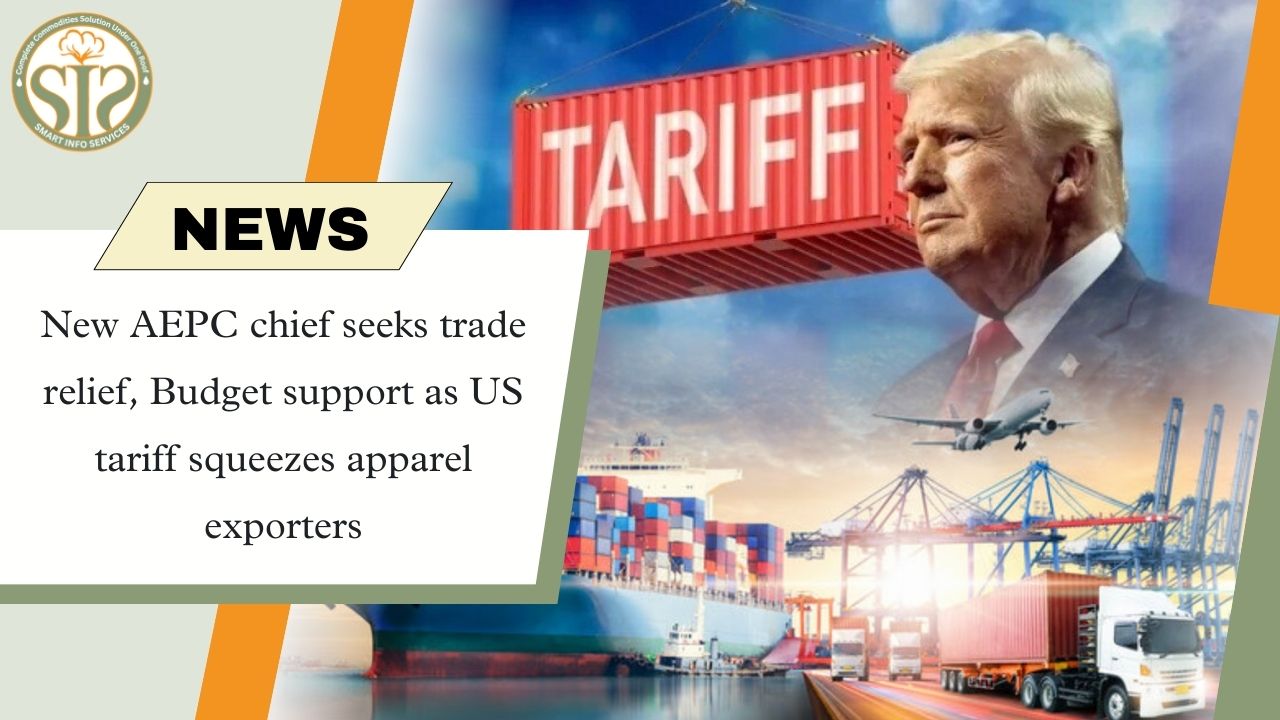
Garment exporters under pressure from US tariffs, AEPC chief seeks relief and budget support

New AEPC chief seeks trade relief, Budget support as US tariff squeezes apparel exportersA Sakthivel, Founder of Tiruppur-based Poppys Knitwear Pvt Ltd, is considered the father of the apparel industry. With over five decades in the industry, he assumed charge as Chairman of the Apparel Export Promotion Council (AEPC) on Tuesday for a record fifth term. In his first interview to a media house after taking over as Chairman, Sakthivel shares with businessline his views on how US tariffs are affecting textile exporters, besides a host of other topics.The US tariff is the biggest issue currently facing the textiles industry. How is the industry going to handle it if this prolongs?The industry is making efforts to diversify export markets beyond the US, especially towards Russia, Japan, South Korea, Chile, and South Africa. The recently concluded FTAs with the UK, New Zealand and Oman will help exporters diversify into these markets and improve the global position of the Indian apparel industry.The industry is also intensifying efforts to scale efficiencies, higher value-added product manufacturing, and fast-tracking sustainability compliance in line with global buyer requirements. This will partially offset the tariff burden. Engagement with the Government is ongoing to seek appropriate trade reliefs and targeted market-linked support schemes to neutralise the tariff disadvantage faced by Indian exporters.The industry is strongly advocating expeditious conclusion of the India–US Bilateral Trade Agreement negotiations to achieve a long-term resolution to the tariff issue.Has the industry accepted the increased US tariffs?The industry has not accepted the increased tariff as a permanent reality, but is managing pragmatically in the short term. India faces a 50 per cent tariff - higher than Bangladesh, Vietnam (20 per cent), and Cambodia/ Indonesia/ Malaysia (19 per cent).What is your primary agenda as chairman of AEPC?The foremost will be product and market diversification. We need to promote export of man-made fibre garments for which global demand is high and we have a scant share. India’s apparel export is highly cotton-centric and its apparel exports are largely concentrated in the US, EU, and UK.We need to diversify exports towards non-conventional and non-traditional destinations. The focus will be on making Indian apparel exports sustainable, especially in view of recent and upcoming EU regulations around sustainability.What is the industry’s demand from the Union Budget?The industry wishes for strengthening interest subvention under the Export Promotion Mission, including enhancement of the interest subvention rate from 2.75 per cent to 5 per cent and relaxation of the current annual value cap of ₹50 lakh per year, to ease credit constraints for MSME exporters.We need reintroduction of a concessional tax rate of 15 per cent under the Income Tax Act to incentivise new manufacturing companies and boost investments in the sector. We need provision of accelerated depreciation benefits for apparel exporters to strengthen the liquidity position and global competitiveness of Indian exporters.The loan moratorium falling due between September 1 and December 31, 2025 must be extended. The industry wants introduction of a new Technology Upgradation Scheme focused on micro units in the MSME segment, in view of the expiry of ATUFS and the non-coverage of micro enterprises under the PLI scheme, to stimulate capital upgradation.The industry in Tiruppur is the worst affected. Hailing from Tiruppur, is there anything that you wish to do for your hometown?Given the inability to compete on price in the short run, Tiruppur exporters are encouraged to leverage their strong sustainability, compliance, and responsible manufacturing credentials as key differentiators.Tiruppur is known as the knitwear capital of India. This is the right time to transform it into the apparel capital of India through greater product diversification across all apparel categories, including woven products.We will encourage Tiruppur manufacturers to establish factories to make swimwear, pullovers and jerseys, brassieres and sportswear.read more :- Sharp jump in cotton imports from zero duty window


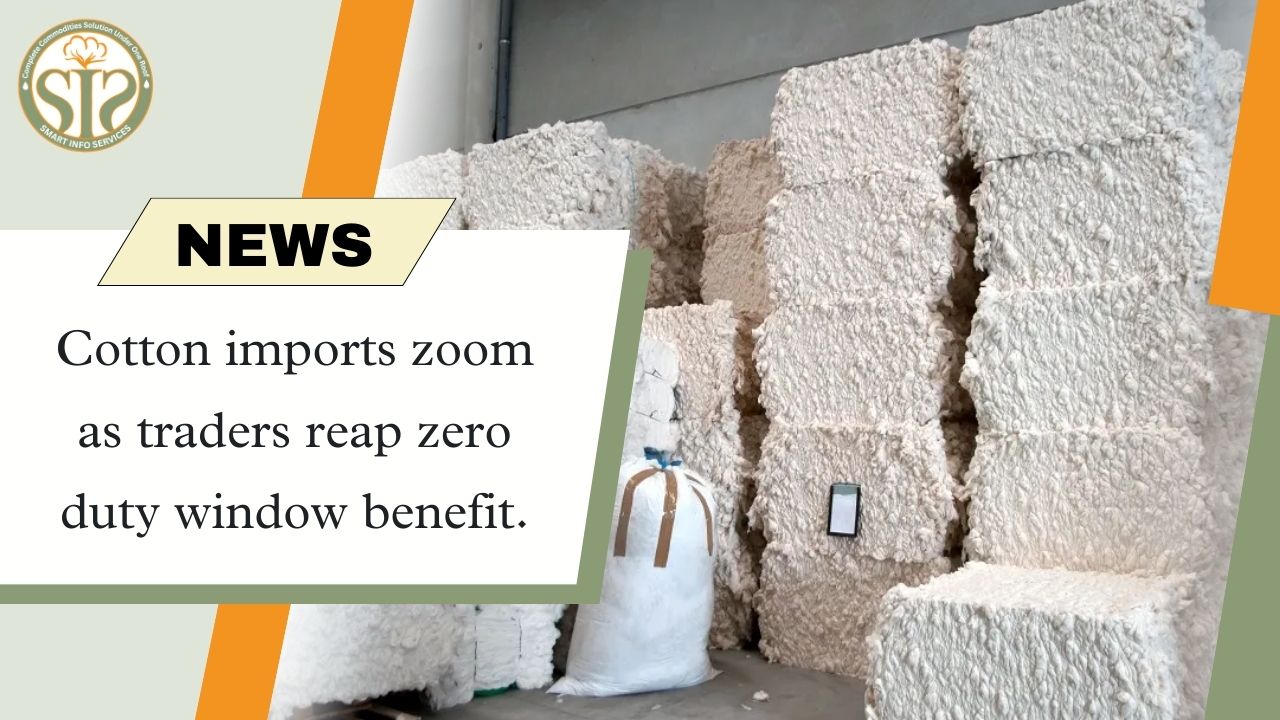
Sharp jump in cotton imports from zero duty window

Cotton imports zoom as traders reap zero duty window benefit.India imported cotton at a record pace, procuring nearly 3 million bales in the December quarter, as buyers rushed to take advantage of the duty-free window till the year-end.This could lead to a second consecutive year of record imports in FY26 amid lower domestic production, rain-damaged crop quality, and higher local prices.Trade bodies, global merchants, and textile mills estimate that total imports during the October-September cotton marketing season could reach 5-6 million bales, depending on government policy, US tariffs, and trade pacts with the EU and the UK.Acting on a longstanding demand from the cotton textile and yarn industry, the government scrapped a 11% import duty on cotton from August 19 till December 31. The industry had anticipated shortages as the area under cotton cultivation has been declining for the past two years.Cotton acreage fell 3.5% in kharif 2025 from the year earlier, adding to a sharper 9.5% decline in kharif 2024 over 2023."The top 10 mills in the country have covered their cotton requirements until May or June through imports," said Atul Ganatra, chairman, Radhalakshmi Group and former president of the Cotton Association of India (CAI).In addition to the strong imports in the first quarter of the cotton marketing year, the industry expects another 2-3 million bales to be imported in the rest of the year.A key reason is the widespread damage to the quality of Indian cotton due to adverse weather conditions. "The quality of at least 50% of this year's cotton production has been affected, which is reflected in parameters such as strength and shine," said K Selvaraju, secretary general of the Southern India Mills Association (SIMA).Export commitments require specific grades of cotton that are contamination-free and of extra- long staple (ELS), for which India depends on imports. "We will import 300,000 bales of Australian cotton between June and August. At least 500,000 bales of duty-free extra-long staple cotton will be imported by September to meet our normal demand for this variety. More than 500,000 bales may also come from Africa, which attracts lower duties," said Ganatra.Cotton imported by processing mills for their captive consumption attracts only 4% import duty. Large mills can import at lower effective duties when domestic prices remain higher than international prices.Meanwhile, state-owned Cotton Corporation of India (CCI) is holding more than 20% of this year's crop through price support procurement at the minimum support price.read more :-Bangladesh proposes safeguard tariff on Indian cotton yarn imports

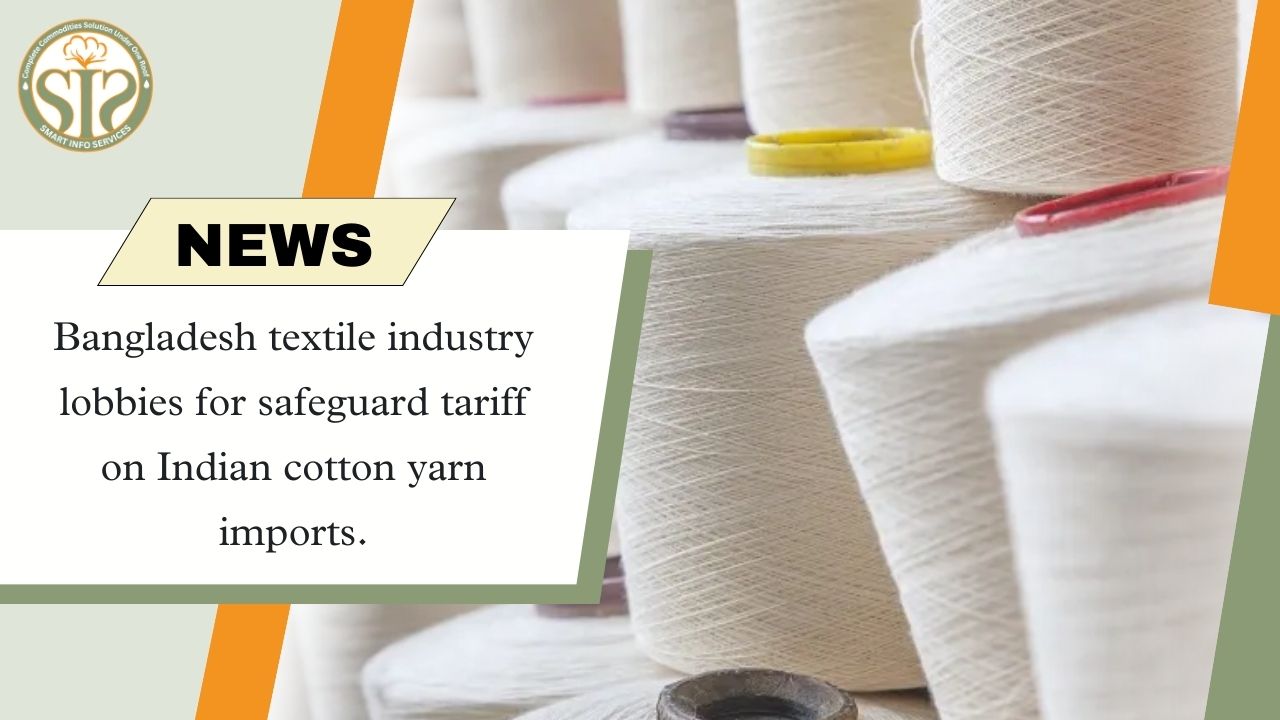
Bangladesh Considers 20% Safeguard Duty on Indian Cotton Yarn Imports

Bangladesh Textile Industry Seeks Safeguard Duty on Indian Cotton Yarn ImportsNagpur: Bangladesh’s textile industry is pushing for the imposition of a 20% safeguard tariff on imports of cotton yarn, blended yarn, and grey mélange from India. The proposal comes amid political and economic uncertainty ahead of elections, with industry players seeking protection for domestic manufacturers.A safeguard tariff is a temporary duty imposed to shield local industries from rising imports. According to reports, a note by a foreign trade research officer in Bangladesh has been circulated among key authorities, including the trade and tariff commission and commerce ministry, recommending the duty. The matter was discussed in a meeting held on January 5, although no official decision has been announced yet.The development has raised concerns in India, particularly among textile manufacturers in regions like Vidarbha, where a significant portion of yarn production is exported to Bangladesh. Industry leaders warn that such a move could deal a double blow—impacting both yarn exports and domestic cotton prices.The timing is critical, as India recently reinstated an 11% import duty on raw cotton from January 1, after temporarily lifting it in August. While the earlier duty relaxation allowed cheaper imports and supported the textile sector, the reimposition has already pushed domestic cotton prices closer to the Minimum Support Price (MSP) of ₹8,110 per quintal for premium grades.Higher cotton costs are squeezing margins for Indian textile manufacturers. If Bangladesh goes ahead with the safeguard tariff, it could further weaken India’s export competitiveness in a key market.According to industry estimates, nearly 30% of yarn produced in Vidarbha—around 3,000 tonnes per month—is exported to Bangladesh, with about 45 manufacturing units dependent on this trade. Any disruption could lead to a surplus in the domestic market, potentially dragging down yarn and cotton prices.The demand for a safeguard duty in Bangladesh is reportedly linked to misuse of duty-free import provisions. Certain licensed importers were allowed to import yarn from India duty-free, provided it was used for export-oriented garment production. However, authorities found that some firms diverted these inputs to produce garments for the domestic market, distorting trade practices.Industry experts believe that any tariff imposition could significantly alter trade dynamics between the two countries, affecting both textile exports and the broader cotton value chain.Read More :- Rupee opens 07 paise down at 89.95

Related News

Youtube Videos

CCI के पास 3-4 लाख गांठ कपास बचने का अनुमान! 😱 बाजार पर कितना होगा असर? | 21 Nov 2026
CCI के पास 3-4 लाख गांठ कपास बचने का अनुमान! 😱 बाजार पर कित...
कपास बाजार तेजी की ओर! 😱 | आज की आवक 1.11 लाख गांठ | रुई, कपास, खल, यार्न, CCI नीलामी
कपास बाजार तेजी की ओर! 😱 | आज की आवक 1.11 लाख गांठ | रुई, क...
कपास बाजार में गिरावट! 😱 भाव ₹10,000 कब? | रुई ₹200-300 कैंडी गिरी | आवक 1,08,800 गांठ
कपास बाजार में गिरावट! 😱 भाव ₹10,000 कब? | रुई ₹200-300 कैं...
Application Download
Whatsapp Contact