Filter

Recent News

US 10% global tariffs; India impacted in deal

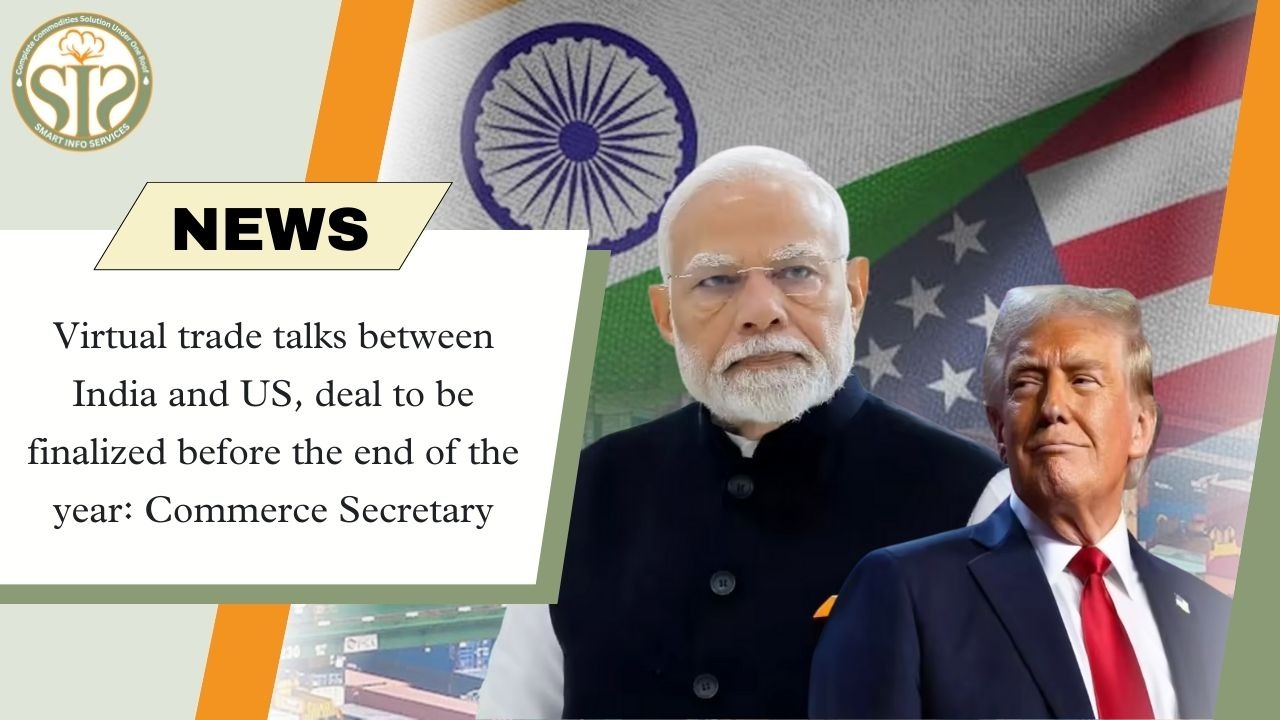
US Imposes 10% Global Tariff; India to Pay Under Trade DealThe United States has announced a 10% global tariff, which India is expected to pay under its trade agreement with Washington. A White House official confirmed the tariff “will remain until another authority is invoked,” urging all trade partners to honor existing deals.The move follows a U.S. Supreme Court ruling (6–3) that Donald Trump’s administration exceeded its powers by using the International Emergency Economic Powers Act (IEEPA) to impose broad import duties. In response, Trump called the verdict a “terrible decision” and announced an executive order under Section 122 of the Trade Act of 1974, authorizing temporary surcharges of up to 15% for 150 days to address balance-of-payments issues.Trump said existing Section 232 (National Security) and Section 301 (Unfair Trade) tariffs remain in place. He criticized the Court for being “swayed by foreign interests” and argued the ruling benefits other countries.The Supreme Court’s decision invalidated billions in emergency tariffs, potentially requiring $130–175 billion in refunds. Markets reacted positively, expecting lower inflationary pressure, though optimism was tempered by Trump’s vow to reimpose levies.Trump affirmed that “the India deal is on,” indicating that bilateral tariff adjustments—such as reducing reciprocal rates to 18%—will continue under new legal authority.read more:-  CCI keeps cotton prices stable, online auction continues

Strong future for the cotton spinning industry by 2033

Cotton Spinning Market Poised for Robust Expansion Through 2033The latest report from Coherent Market Insights, titled “Cotton Spinning Market: Trends, Share, Size, Growth, Opportunities, and Forecast 2026–2033,” presents an in-depth assessment of the global cotton spinning industry. This comprehensive study offers valuable insights into key market dynamics, including growth drivers, challenges, regional trends, and the competitive landscape.The report features detailed analyses supported by tables, charts, and figures, highlighting the significant expansion of the cotton spinning market in recent years. Growth has been propelled by rising product demand, a broadening consumer base, and continuous technological innovation across the textile value chain.Key areas covered include market size and segmentation, industry trends, competitive positioning, and future growth prospects. The study also evaluates major developments such as mergers and acquisitions, partnerships, product innovations, and marketing strategies adopted by leading industry playersThe report provides a comprehensive view of the market’s performance across major regions—North America, Europe, Asia-Pacific, South America, the Middle East, and Africa—analyzing production, consumption, and revenue trends. Both historical data and forward-looking projections (2026–2033) are included to offer a complete understanding of market evolution in terms of value and volume.In addition, the analysis explores key macroeconomic influences, regulatory frameworks, and technological advancements shaping the sector. With rising sustainability concerns and digital transformation in textile manufacturing, the global cotton spinning market is expected to experience substantial growth momentum through 2033read more:-  Rupee opens 30 paise down at 90.94
Gujarat made a big increase in the textile budget.
India's Gujarat state raises textile outlay by 38% in Budget for FY27India’s western state of Gujarat has announced a sharp increase in financial outlay for the textile sector, with allocation under the Development of Textile Industry scheme rising to ₹2,755 crore (~$302.71 million). The higher outlay signals a strong push to sustain Gujarat’s leadership in textile manufacturing while strengthening export competitiveness and MSME participation.State Finance Minister Kanubhai Desai presented the State Budget for fiscal 2026–27 in the Legislative Assembly on Wednesday in Gandhinagar. The allocation under the Development of Textile Industry scheme has increased from ₹2,000 crore in 2025–26 and ₹2,036.47 crore in 2024–25, reflecting a significant year-on-year expansion in subsidy-driven industrial support.The scheme is expected to facilitate capacity expansion, technology upgradation and investment promotion across the textile value chain. Alongside industrial support, the Budget continues provisions for cottage, handloom and small-scale textile ecosystems through grants, subsidies and institutional assistance, covering cooperative manufacturing, training and research support, and export facilitation for smaller producers.Artisan-focused measures also feature prominently. Financial assistance to the Gujarat State Handicraft Development Corporation has been increased to ₹48.05 crore ($5.27 million) for 2026–27 from ₹41.86 crore in the previous year, aimed at strengthening market access and institutional support. A further ₹23 crore ($2.53 million) has been earmarked for design competitions, exhibitions and promotional initiatives to enhance product innovation and visibility in the handicraft segment.To support export-oriented industries, including textiles and apparel, the Budget proposes establishing the Gujarat State Export Promotion Council with an allocation of ₹5.90 crore (~$6.48 million) to facilitate export development and market expansion. In addition, provisions enabling handloom and handicraft stakeholders to leverage e-commerce platforms indicate an emerging focus on digital market access and diversification.Overall, the Budget underscores a dual strategy of scaling industrial textile investment through a higher core outlay while sustaining traditional and MSME segments through targeted support, export facilitation and digital market initiatives.Ashish Gujarati former President of the Southern Gujarat Chamber of Commerce and Industry (SGCCI) commented on the budget, “The increase in textile allocation from ₹2,000 crore to ₹2,755 crore reflects the State’s continued commitment to implementing the Gujarat Textile Policy and supporting sector growth.” He added that the proposed formation of the Gujarat Export Promotion Council is a positive step that is expected to facilitate higher exports of MSME products by strengthening market access and institutional support.read more:-  Central and state budgets to boost MSMEs

Central and state budgets to boost MSMEs

*"The Union and State Budgets will strengthen Bhilwara's textile industry," said Riju Jhunjhunwala, who stated that manufacturing exports and MSMEs will receive a boost.*Riju Jhunjhunwala of the RSWM Bhilwara Group expressed his gratitude to the Prime Minister for the Union Budget 2026–27. He described the budget as growth-oriented, encouraging manufacturing, empowering small and medium-sized enterprises, and boosting exports.Jhunjhunwala stated that Bhilwara, recognized as a major textile hub in the country, will directly benefit from this budget. Technology upgrades, the use of modern machinery, infrastructure expansion, transportation improvements, and a special emphasis on skill development will further strengthen textile units here. This will increase production capacity, improve global competitiveness, and create new employment opportunities.He stated that the budget provisions will encourage new investment in Bhilwara. Value addition, the use of green energy, and increased export opportunities will provide new direction and momentum to the local industry.Rajasthan Budget Also PraisedRiju Jhunjhunwala also praised the Rajasthan Budget presented by Deputy Chief Minister and Finance Minister Diya Kumari. He stated that the state budget focuses on infrastructure, industrial development, and strengthening connectivity, which will strengthen the industrial ecosystem in Bhilwara and the entire state.Expressing gratitude to Chief Minister Bhajan Lal Sharma and the state leadership, he said that the current government's efforts have created a positive industrial environment in the state.He expressed confidence that the coordinated efforts of the central and state governments will make Bhilwara's textile sector even stronger and more competitive not only nationally but also globally. read more:-   There is no legal guarantee on MSP, the committee will find a middle path.  

There is no legal guarantee on MSP, the committee will find a middle path.

*The committee is preparing to find a middle ground, not a legal guarantee of MSP; members exert pressure*Several members of the MSP Committee, formed by the central government, have advocated for a system in which farmers receive the Minimum Support Price (MSP) both inside and outside the market. Currently, government and cooperative procurement agencies purchase crops at MSP in the market if the quality of the crop meets the prescribed standards, but this system is not applicable outside the market, i.e., for the private sector. Instead of a system such as a legal guarantee of MSP, the committee members are trying to find a middle ground so that their image among farmers is not tarnished. This was revealed at the committee meeting held in New Delhi on Wednesday.*All meetings have been inconclusive so far*Since the committee's formation on July 22, 2022, seven meetings have been held. Additionally, 35 sub-committees of the committee have met, but its members have not yet reached any conclusions. This is the first meeting of the committee since the formation of the new central government in 2024. The next meeting will be held in March.The committee's members, appointed by farmers' organizations, want to prepare a report and submit it to the government as soon as possible, as the committee has been formed for a long time. Meanwhile, the Kisan Jagriti Yatra of the Samyukta Kisan Morcha (non-political) is underway, demanding a legal guarantee for MSP.*Increased Pressure on MSP*However, the committee's meeting, held after a long time, was chaotic because most of the bureaucrats involved did not want the MSP system to be implemented outside the market. In fact, the officials do not have to go among the farmers to answer, but the farmer leaders have to go among the farmers and the public.Therefore, they do not want to do anything that would lead to criticism from farmers or the general public. Therefore, they are very cautious on the issue of MSP, as it is a very sensitive issue for farmers. Natural farming and crop diversification were also discussed throughout the day-long meeting, but the issue of MSP dominated.The five committee members who had recently pressured the chairman to declare a reserve price for crops remained firm on this issue. They stated that the MSP, which the government itself determines, should be available to farmers both inside and outside the market. It remains to be seen whether the committee chairman will agree with the members or take a different stance.*When and why was the committee formed?*The announcement of the MSP committee regarding MSP was made on November 19, 2021, alongside Prime Minister Narendra Modi's repeal of three controversial agricultural laws. However, the protesters sitting on the Delhi border wanted something in writing. Subsequently, on December 9, 2021, the then Agriculture Secretary, Sanjay Agarwal, issued a letter to farmer organizations, after which the protesting farmers returned to their homes from the Delhi border.Nearly eight months after this announcement, the notification for the formation of the committee came on July 12, 2022. However, the government appointed the same Sanjay Agarwal as the chairman of this committee, during whose tenure as Union Agriculture Secretary, three agricultural laws were introduced and a 13-month-long farmers' movement was carried out.read more :-   Maharashtra CM writes to Centre on cotton crisis

Maharashtra CM Seeks Extension of Cotton MSP Procurement Period

Cotton Procurement: Maharashtra CM Urges Centre to Extend MSP Buying Period for FarmersMaharashtra Chief Minister Devendra Fadnavis has urged the Central Government to extend the procurement period for cotton under the Minimum Support Price (MSP) scheme, citing concerns over potential losses to farmers across the state.In a letter addressed to Union Textiles Minister Giriraj Singh, Fadnavis requested an extension of the procurement window being carried out by the Cotton Corporation of India (CCI) for the 2025–26 cotton season. Currently, CCI has set February 27, 2026, as the last date for MSP-based procurement. However, the Chief Minister noted that a significant quantity of farmers’ cotton still remains unsold in Maharashtra.Risk of price crash in open marketThe Chief Minister warned that if government procurement ends as scheduled, cotton prices in the open market could decline sharply. This would lead to substantial financial losses for farmers who are still holding their produce. He emphasized that extending procurement until April 30, 2026, would help stabilize prices and give farmers sufficient time to sell their crop at fair rates.Demand for extended procurement till AprilFadnavis has requested the Union Ministry of Textiles to direct the Cotton Corporation of India to continue MSP procurement until the end of April 2026. He said this step is crucial to safeguard the interests of cotton growers in Maharashtra amid ongoing market uncertainty.MSP rates for 2025–26 seasonFor the Kharif Marketing Season 2025–26, the Central Government has fixed MSP at ₹7,710 per quintal for medium staple cotton and ₹8,110 per quintal for long staple cotton.Concerns over import policy impactThe Chief Minister also highlighted that policy decisions allowing duty-free cotton imports till December 31, 2025, had increased pressure on domestic prices. He noted that increased inflow of foreign cotton, combined with tariff relaxations, has adversely impacted local farmers despite MSP support.Fadnavis stressed that while MSP procurement provides some relief, failing to extend the buying period could once again force farmers to sell their produce at lower market prices, deepening their financial stress.read more :-    Despite India-US agreement, exports remain sluggish 

Cotton market sluggish in Jalgaon, production less than target

Slowdown in Jalgaon cotton market, only half of target production achievedJalgaon: This year, due to heavy rains in Kharipat, less cotton production, less price received from traders etc., cotton was sold in less quantity in the market. Stopping of sale of cotton in the market for the last eight days indirectly shows that the cotton season is over. The price of cotton with private traders is Rs 7,200 per quintal. CCI has also stopped purchasing cotton from the centres. Due to lack of cotton in the market, the production of bales by ginners has also stopped.Till now CCI has purchased three lakh bales of cotton. Traders purchased enough cotton to produce three to three and a half million bales. Till now a total of 6 lakh 50 thousand bales have been produced. Lumps will form within a few days. That would be one lakh. This season, ginning drivers have set a target of 15 lakh bales. Only six and a half lakh bales could be produced.It is estimated that one lakh bales of cotton will be produced from the cotton available with the ginners. If we look at the overall situation, out of 15 lakh, only seven and a half lakh bales will be produced. Farmers are not bringing cotton due to the fall of 500 to 600 rupees in cotton prices by traders since last month, the arrival of cotton at CCI centers has also reduced. Due to poor quality of incoming cotton, procurement has stopped and ginners are in trouble.4 million bales of cotton were imported into India as the central government adopted a cotton import policy to avoid a potential cotton crisis on the country's textile mills and industries. Import was only 10 lakh bales per year. However, on the other hand, ginning operators will also produce bales in the country. Ginning drivers expected Khandesh to produce 2 million bales. However, the cotton import policy this year has had no impact on Indian cotton. Farmers did not sell as much cotton as they wanted, in hopes that the price would rise.According to the price guaranteed by the Central Government by CCI, Rs 8 thousand 100. Cotton was purchased. However, cotton which had higher moisture content was bought at a lower price, with traders offering rates of Rs 7,600 to Rs 7,700 depending on the quality of the cotton. This is also now 7,200 to 7,400 and farmers are selling less cotton.There is no fair price for exportBefore the cotton import policy, cotton fetched a price of Rs 55,000 to Rs 56,000 per khandi (two bales). Its rates came down to Rs 52 to 53 thousand per khandi. Therefore, since there will be no export of cotton, the price of Indian cotton will remain low.Ginners suffered losses this year due to low arrival of cotton. The price of cotton with traders was Rs 7200 to 7500. However, they also lacked quality. Due to lack of price, purchases from traders stopped. In such a situation, the ginning industry is in trouble due to stoppage of bale production. Till now six and a half lakh bales have been made, one lakh more bales will be ready.- Pradeep Jain, President, Khandesh Ginning Pressing Mill Owners Association.read more :- Rupee fell 02 paise to close at 90.67 per dollar

Related News

Youtube Videos

जानिए आज का कपास बाज़ार? 😱 Cotton Market Rate Today #kapasbajar
जानिए आज का कपास बाज़ार? 😱 Cotton Market Rate Today #kapasba...
ऐसा रहा आज कपास बाज़ार 😱 राजस्थान कपास बुआई | Cotton Market 22 July
ऐसा रहा आज कपास बाज़ार 😱 राजस्थान कपास बुआई | Cotton Market...
कपास बाज़ार में आज क्या हुआ? 😱 Cotton Market Rate 21 July 2026
कपास बाज़ार में आज क्या हुआ? 😱 Cotton Market Rate 21 July 2...
कैसा रहा आज का कपास बाज़ार? 😱 Cotton Market Rate Today | 20 July 2026
कैसा रहा आज का कपास बाज़ार? 😱 Cotton Market Rate Today | 20...
इस हफ्ते कपास में तेज़ी या मंदी? 😱 CCI ने बेचीं 3.18 लाख गांठें | Weekly Cotton Market
इस हफ्ते कपास में तेज़ी या मंदी? 😱 CCI ने बेचीं 3.18 लाख गा...
Cotton rate today: आज के कपास के भाव 🤔 #kapas  #youtube
Cotton rate today: आज के कपास के भाव 🤔 #kapas #youtube
रुई बाज़ार में आज तेज़ी का रुख 😱 CCI ने बेचीं 40,000+ गठानें #kapas
रुई बाज़ार में आज तेज़ी का रुख 😱 CCI ने बेचीं 40,000+ गठानें...
ऐसा रहा आज कपास बाज़ार 😱  राजस्थान कपास बुआई | Cotton Market 15 July
ऐसा रहा आज कपास बाज़ार 😱 राजस्थान कपास बुआई | Cotton Marke...
कपास की कीमतों में उछाल 😱 Cotton market rate today #kapasnabhav
कपास की कीमतों में उछाल 😱 Cotton market rate today #kapasna...
CCI Update: आज कितनी रुई गठानें बिकीं? 😱 Cotton market price today
CCI Update: आज कितनी रुई गठानें बिकीं? 😱 Cotton market pric...
साप्ताहिक कपास बाजार में तेज़ी 😱 Weekly cotton market review #kapas
साप्ताहिक कपास बाजार में तेज़ी 😱 Weekly cotton market review...
जानिए आज का कपास बाज़ार 😱 Cotton market rate today #kapas
कपास की कीमतों में उछाल 😱 Cotton market rate today #kapas
रुई बाज़ार में आज तेज़ी का रुख 😱 CCI ने बेचीं  70,000+ गठानें  #kapas
रुई बाज़ार में आज तेज़ी का रुख 😱 CCI ने बेचीं 70,000+ गठानें...
कैसा रहा आज का कपास बाज़ार? 😱 | Cotton Market Rate Today | 06 July 2026
कैसा रहा आज का कपास बाज़ार? 😱 | Cotton Market Rate Today |...
Application Download
Whatsapp Contact